
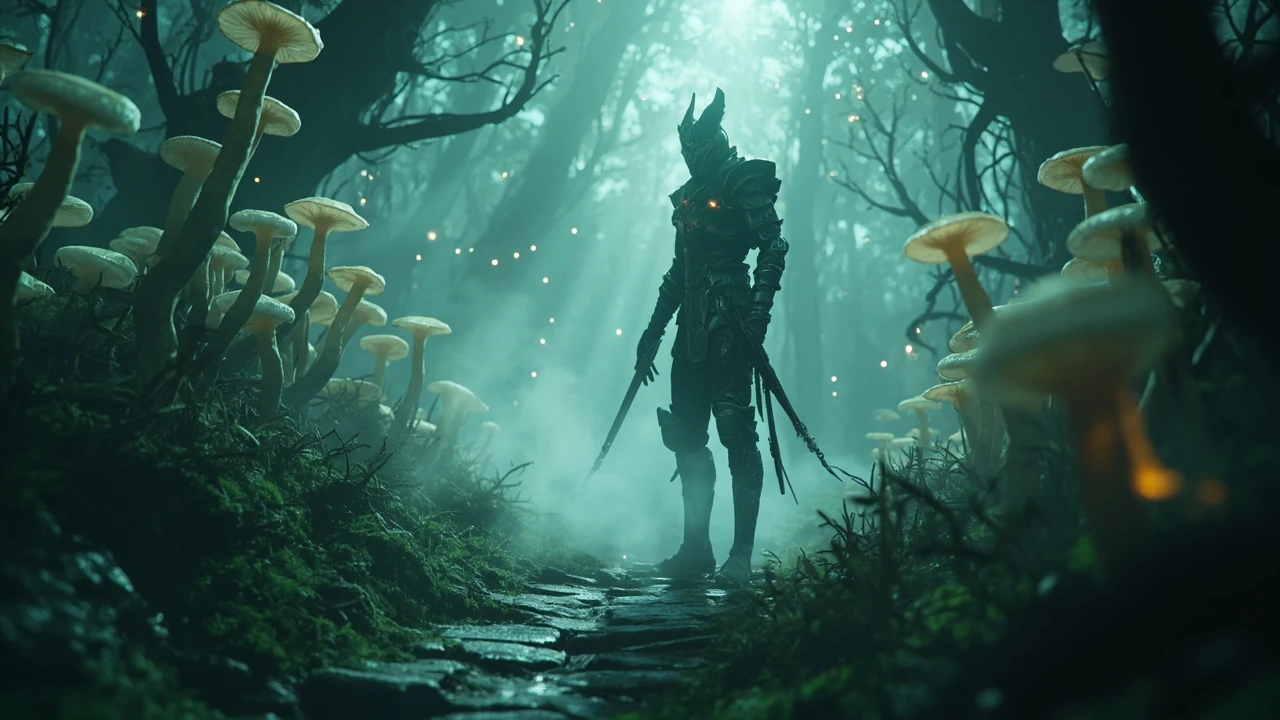
Wisp Thicket in Silksong: how this small biome shapes the early Pharloom journey
Wisp Thicket is one of the compact side biomes that sit between the larger regions of Pharloom in Hollow Knight: Silksong. It reads on the map in a single glance, yet its role in the early game is more interesting than its size suggests. The developers at Team Cherry use it to reintroduce a familiar resource loop, a familiar environmental hazard, and a familiar enemy archetype, but inside a setting that feels distinct from Dirtmouth and the Forgotten Crossroads of the first game. For a designer or producer studying the sequel, the area works as a focused case study in how a sequel can teach old mechanics in a new costume without padding the runtime. For a player, it works as a short detour that saves time later, provided you know which corners to check and which upgrades to bring.
This guide treats Wisp Thicket as one biome, one encounter profile, and one production decision at a time. It explains where the thicket sits on the Pharloom map, what to expect when you cross its threshold, which enemies and hazards actually live there, what the developers appear to have changed since the original Hollow Knight, and how Hornet can move through the area with the fewest deaths. The aim is to be useful to both a player who is still finding the area on a first playthrough and a developer who wants to understand what design purpose the room serves in the broader Silksong structure.
Where Wisp Thicket fits in Pharloom
Pharloom is the kingdom of silk that frames Silksong, and the developers at Team Cherry have built it as a vertical stack of regions rather than a single open map. Wisp Thicket sits in the lower middle of that stack, in a position that places it between the citadel approach, the bone wastes, and the mossy underbelly that most players cross first. In the original Hollow Knight, regions like this would typically be tucked behind a vertical shaft, a breakable floor, or a hidden climb. Silksong keeps that tradition but adds more three-dimensional transitions, because Hornet can pole-vault, cling to rings of silk, and dive in directions the Knight could not.
For orientation, the Wisp Thicket works as a transitional biome. You do not spend many hours inside it, but you almost always pass through on the way to something larger. The thicket connects upward to a mossy transition that leads toward the central citadel, and it loops downward through a sequence of small caves into a quieter section of forest floor. Because it sits between two larger regions, the designers appear to have used it as a palette cleanser. It changes the audio, the lighting, and the pacing just enough that the player feels they have moved somewhere new without the team having to build a full-scale dungeon.
| Region context | What Wisp Thicket is next to | How Hornet typically enters |
|---|---|---|
| Citadel approach | Moss-covered upper terraces that lead toward the central silk city | From an upper climb after the first silk ability unlock |
| Bone wastes | Dry, pale caves with bone-like geometry and brittle floor tiles | From a lower tunnel that runs under the thicket floor |
| Quiet forest floor | Low-level enemy patrols and small resource nodes | From the main path as a side detour |
| Vertical connector | A long silk-thread shaft that links multiple biomes | From a wall that only Hornet can cling to |
What the area actually looks like
The thicket is presented as a stand of tall, pale mushroom stalks with drooping silk threads woven between them. Light filters down from gaps in the canopy in a way that the developers use to make the wisps themselves readable. Those wisps are the namesake of the region: small floating motes of light that drift through the air in slow loops. They are not hostile, but they interact with the lighting engine in a way that the original Hollow Knight used sparingly, and Silksong leans into the effect more often.
From a production standpoint, this kind of environment is useful because it sells depth cheaply. A few layered parallax planes, a fog volume, and a handful of particle emitters are enough to make the player feel they are inside a forest rather than a corridor. For a small studio, the thicket is the kind of biome that proves a content budget can stretch further when lighting and audio carry the mood instead of bespoke geometry.
Lighting and audio cues
Three signals are worth learning if you want to navigate the area without slowing down:
- Drifting wisps. Their position is not random. They trace a slow arc that mirrors the path through the room, and a designer watching the lighting pass would notice that they are placed to mark safe ground and to signal the next safe landing.
- Thread hum. The silk threads between the mushroom stalks give off a faint hum when Hornet gets close. The audio mix rises slightly under the ambient track, and the team uses that to telegraph the thread the player can climb.
- Distant choir. When you are near the transition to a larger region, a low choral pad fades in. It is the same trick Team Cherry used in the Fungal Wastes and Greenpath of the first game, and it still works because the brain learns to associate the pad with a checkpoint or a save point.
Enemies you meet inside the thicket
The enemy set in Wisp Thicket is a curated mix of returning types and a couple of new behaviors. The original Hollow Knight relied on a small set of bug enemies that could be re-skinned and re-positioned to make every region feel different. Silksong extends that approach, and the thicket is one of the clearer examples. The roster is short, but each enemy asks for a different response from Hornet.
| Enemy type | Behavior | Suggested Hornet response |
|---|---|---|
| Threadfly swarms | Small flying bugs that travel in loose groups and dart toward Hornet when she is mid-air | Stay grounded, use the needle to clear a single swarm, and avoid double jumps near them |
| Mushroom stalkers | Tall enemies that lean out from behind the pale stalks and snap inward when you pass | Use silk dash to slip past their grab, then strike from below |
| Ground mites | Fast low enemies that travel along the floor in short bursts | Pogo off them with a downward strike to gain height |
| Spore shooters | Stationary enemies that puff a slow cloud when approached | Wait for the cloud to clear or use ranged silk to pull them out |
| Hanging silk sacs | Environmental hazard that drops a small pest when struck from below | Strike once to pop the sac, then retreat to avoid the burst |
For developers, the enemy set is interesting because none of the five archetypes is mechanically new in the way that, say, a boss would be. Each is a familiar action packaged in a new shell. The mushroom stalker is the spiritual cousin of the Moss Charger from Greenpath. The spore shooter is a more controllable relative of the Fungal Core enemies. That decision lets the team teach new movement options without forcing a new combat idea, and it keeps the early hours of the game from becoming a tutorial marathon.
Hazards the developers want you to learn
The thicket carries two main hazards that map cleanly to the abilities Hornet unlocks just before she reaches it. The first is the hanging silk threads. They look like decoration, but several of them can be grabbed and swung from, which gives Hornet vertical room that the Knight did not have. The second hazard is the patches of needle-sharp grass that sit on the floor of the lower rooms. They deal chip damage and slow her down.
These hazards are not difficult, but they are diagnostic. When a player dies repeatedly to one of them, it usually means they are missing an ability that the developers intended to be active by the time they reached this point. A few of those scenarios are worth knowing in advance.
- Dying on the hanging threads: usually a sign that the silk grapple has not been used yet. The threads only become safe to grab once Hornet has the right upgrade, and they tend to be more forgiving in rooms that are clearly built around the swing.
- Dying on the ground spikes: usually a sign that the dash has not been used aggressively. The dash can clear a small patch without damage if it is committed early, before the needle grass is in range.
- Dying in the wisp fields: often a sign that the player is fighting where they stand instead of moving. The wisps mark safe ground, and the developers built the room so that standing still is the worst option.
- Losing track of the bench: a frequent cause of repeated deaths. The bench sits off the main path on purpose, and missing it usually means the player has not slowed down enough to read the room.
Rewards and why the area is worth the detour
Wisp Thicket is short, but it tends to pay out better than its size suggests. Three reward categories are worth flagging, and a fourth shows up if the player explores the back rooms.
- Rosaries and shell shards. These are the regional currency and a small but common pickup. The thicket has a small bench of shell shards that the developers appear to have placed in a back room, behind a breakable wall, so that exploration gets a small payout.
- A bench and a waypoint. A resting bench sits in a sheltered corner of the thicket, and a waypoint that connects to other regions of Pharloom is nearby. That bench is one of the more useful early checkpoints, because it is the first place a player can rest between two larger regions.
- A Silk ability token. One of the abilities Hornet needs for the mid-game sits inside the thicket. It is not flagged on the map, and the developers rely on environmental storytelling to hint at it. A group of three wisps lines up to point toward the room.
- A small lore entry. A back chamber contains a single readable tablet that adds a sentence or two of context for the area. It is optional, but it tends to sit close to the shell shard cache and the hidden Silk token.
For a developer, the rewards are a lesson in pacing. The thicket is short enough that a player will not feel lost, but it is dense enough that the rewards feel earned. That balance is the same one Team Cherry has used in the first game, and it is interesting to see the same approach survive into the sequel with very little retuning.
How the area differs from Hollow Knight
Comparing Wisp Thicket with similar biomes in the first game is one of the easier ways to see what Silksong is doing differently. A side-by-side reading of the design notes and the public Hollow Knight entry shows that the team is keeping the same structural idea while pushing the presentation further. The thicket shares the same role as the Fog Canyon or the Fungal Wastes, but the lighting, the audio, and the enemy count are denser in the sequel.
| Design dimension | Original Hollow Knight | Wisp Thicket in Silksong |
|---|---|---|
| Region size | Mid-sized standalone biome | Smaller transitional biome |
| Lighting | Two-state fog and glow | Multi-state lighting tied to wisps and threads |
| Audio | One ambient track per region | Layered ambient with a choral transition cue |
| Enemy roster | Mostly new types per region | Mix of new types and re-skinned classics |
| Verticality | Limited to double jump and wall jump | Adds silk grapple, dive, and ring swing |
| Waypoint density | Sparse, one per large biome | Denser, with transitional waypoints between biomes |
The shift to layered lighting and richer verticality is a clear production decision. Silksong is built on a more recent version of the Unity engine that the team has been using since the first game, and the rendering budget per room is higher. The thicket benefits from that, because the wisps would have been expensive to draw in the first game but are cheap in the sequel. The denser waypoint network is a similar story: the team is treating fast travel as a way to keep the world readable, rather than as a reward for finishing a region.
What developers can learn from how the thicket is built
For a studio working on a metroidvania, the thicket is a useful case study. It is small, but it covers several of the production problems that come up in any open-ended game.
- Environmental storytelling on a small budget. The wisps, the threads, and the choral pad all do the work that would normally require scripted cutscenes. A small team can use the same trick to keep its scope honest.
- Re-skinning as a content strategy. Each enemy in the thicket is a familiar action with a new look. That is the cheapest way to make a region feel new without a new combat system.
- Biome-as-palette-cleanser. A short biome that sits between two large ones gives the player a breather. The thicket is paced that way on purpose.
- Hiding a waypoint behind exploration. A save point that is easy to miss rewards the player who reads the environment. It is the same pattern Team Cherry used for the hidden stations in the first game.
- Reading the player’s loadout through death patterns. The hazards in the thicket are designed to expose missing abilities rather than punish the player unfairly. A studio that wants to teach new moves can do worse than to copy the same approach.
For a team planning a sequel, the lesson is that the cheap choices are not always the wrong ones. A smaller biome with better lighting, better audio, and a focused reward loop can be more memorable than a larger biome that tries to do too much. The thicket earns its place in the early loop because it commits to a small set of ideas and executes them well.
How to clear the thicket quickly
For a player who wants to spend as little time as possible inside the thicket, a clean route through it looks like this. The steps assume Hornet has the silk dash and the basic needle attacks, which is the typical loadout when the area becomes available.
- Drop in from the upper entrance and stick to the right wall. The right side is closer to the bench and is less populated by mushroom stalkers.
- Use the first hanging thread to swing over the lower needle grass. The thread hum gives it away, and a well-timed dash at the apex of the swing covers the most ground.
- Follow the wisp trail through the central chamber. The wisps are not random, and they are placed to mark the safe path past the spore shooters.
- Stop at the bench and save. The bench is the natural split point between the thicket and the larger region beyond it.
- Take the lower exit toward the bone wastes, which is the route that is most useful for the next main story beat and avoids the trickier upper climb.
For a player who is missing one of the abilities, the route has to be adjusted. The official differences and new features guide for Hollow Knight: Silksong is the most useful outside reference for the new movement options, and it is worth reading before the first attempt so that the missing ability is the only thing the player is searching for.
Common problems and how the developers expect you to solve them
Most of the friction inside the thicket comes from a mismatch between the player’s loadout and the room’s expectations. A few of the most common situations are worth naming.
| Problem | What it usually means | Cleanest solution |
|---|---|---|
| Threadfly swarms keep interrupting double jumps | The double jump is being used in mid-air near the swarms | Dash on the ground and strike from below instead |
| Mushroom stalker grabs Hornet off the wall | Wall cling is being held too long | Release the cling and dash past the grab window |
| Spore cloud locks the room in place | The ranged silk option has not been used | Pull the spore shooter out of its perch before clearing the room |
| Hidden ability room is missed | The wisp trail was treated as decoration | Follow the wisps, not the player path, and check side alcoves |
| Bench is missed on a first pass | Movement is too fast for the room size | Slow down at the first choral cue, which usually marks the bench |
How Wisp Thicket connects to the wider Silksong loop
The thicket is one node in a larger system. The bench inside it acts as a save point for two different regions. The waypoint nearby acts as a fast-travel anchor for the lower half of the map. The Silk ability token inside the thicket feeds into the central ability tree that opens the mid-game. A few connections are worth understanding before you clear the area.
- To the mossy terraces above. The thicket is the easiest way back up if you have already moved past the mossy region, because the hanging threads give a fast vertical return.
- To the bone wastes below. The lower exit leads into the dry caves that act as a second mid-game hub. The thicket is the cleanest connection between the two halves of the early game.
- To the waypoint network. Once the waypoint near the bench is unlocked, the rest of the lower Pharloom map opens up. That is why the developers placed it there.
- To the main quest. The Silk ability token is one of the prerequisites for a mid-game main story beat, so the thicket quietly sits on the critical path even when it does not feel like a main story location.
Where the area is likely to change after launch
It is worth keeping in mind that Silksong is a live game in the same way that the first Hollow Knight became one. Team Cherry has a track record of patching side biomes after release, and a small area like Wisp Thicket is the kind of place that often gets small balance changes. Players who reach the area much later in the game’s life should expect slightly different enemy counts, slightly different reward payouts, and possibly a small new shortcut. None of those changes are guaranteed, and none of them should be relied on for a first playthrough, but they are worth keeping in mind if you are comparing different runs or reading older guides.
Why the area matters for first-time players
For a first-time player, the thicket is a confidence-building area. It is short, the rewards are visible, the enemies are predictable once you have read the room, and the bench gives a clear save point before a longer stretch. That is the same role Greenpath played in the first game, and the same role the first hour of any good metroidvania is supposed to play. If the player is dying here, it is usually because they are missing an ability, not because the area is unfair.
For a developer, that is the more interesting lesson. The thicket is the kind of small, well-paced area that does not draw attention to itself but quietly carries the early game. A team that wants to learn how to ship a metroidvania on a small budget would do well to study it, because it does almost everything right within a small footprint. The combination of layered lighting, focused enemy design, and a short but generous reward loop is a useful template for any studio that has to ship a sequel on a larger map without inflating its content budget.
What to do next once the thicket is clear
Once the area is clear, the natural next move depends on what the player wants from the run. Three options are usually available.
- Push toward the bone wastes. The lower exit leads into a region that is more combat-heavy and that introduces a couple of tougher enemies. It is the path that the main story beats tend to follow.
- Return to the mossy terraces. A quick return to the upper region lets the player grab any pickups they skipped and then push toward the citadel, which is the next major story beat.
- Explore the hidden side rooms. The thicket has a couple of breakable walls and a back chamber that contains shell shards and a small lore entry. Those rooms are optional but worth the detour for completionists.
For a developer, the natural next step is to compare how the thicket sits in the early-game loop with how similar biomes have been used in the first game. The comparison is one of the easier ways to see what the team kept, what they cut, and what they tightened up for the sequel. A short studio postmortem that walks through the same checklist is one of the better ways to turn a player’s observation of the area into a designer’s lesson.
Frequently asked questions
Where is Wisp Thicket in Silksong?
Wisp Thicket is a small transitional biome in the lower middle of Pharloom. It sits between the mossy terraces that lead up to the citadel and the dry bone wastes below. Hornet typically enters from the upper climb after the first silk ability unlock or from a lower tunnel that runs under the thicket floor.
Is Wisp Thicket required to progress the main story?
The thicket is not strictly required, but it is one of the cleanest routes between the early and mid-game regions. Most players clear it on a first run because the bench, the waypoint, and the Silk ability token inside it are needed for the next main story beat.
What rewards are inside Wisp Thicket?
The area contains a resting bench, a waypoint that connects to other regions of Pharloom, a small stash of shell shards, a handful of rosaries, a small lore tablet, and a Silk ability token. The token is the most important reward, and it unlocks one of the mid-game movement options Hornet needs to keep moving.
Which enemies are in Wisp Thicket?
The thicket has five main enemy types: threadfly swarms, mushroom stalkers, ground mites, spore shooters, and hanging silk sacs that drop a small pest when struck. None of them is mechanically new, and they are best treated as a mix of returning archetypes with new visuals. Each one asks for a different response from Hornet’s needle, dash, and silk tools.
What is the best way to clear the thicket quickly?
Drop in from the upper entrance, follow the right wall, use the first hanging thread to swing over the lower needle grass, follow the wisp trail through the central chamber, and save at the bench before taking the lower exit toward the bone wastes. The full run takes only a few minutes once the route is known.
Why is the area called Wisp Thicket?
The name comes from the small floating lights that drift through the air. They trace slow arcs that mark the safe path through the rooms, and the developers used them to make the lighting readable without a heavy scripted layer. They are also the visual signal that tells the player the room is alive.
Do I need a specific ability to enter Wisp Thicket?
You can reach the area with the basic loadout, but a few of the rooms expect Hornet to have the silk dash and at least the first movement upgrade. If a room feels impossible, the missing ability is usually the cause, and the developers placed the thicket after those abilities become available so that the player is not blocked.
How does Wisp Thicket compare with biomes in the first Hollow Knight?
The thicket plays a similar role to Greenpath or Fog Canyon in the first game. It is smaller, denser, and more vertical than those biomes, because Silksong adds silk grapple, dive, and ring swing. The lighting is also more layered, and the enemy count is higher per room, which is one of the clearest production differences between the two games.
Does the area change after patches?
It is reasonable to expect small balance changes after launch, because Team Cherry has a track record of patching side biomes in the first game. The thicket is the kind of compact area that can absorb a small enemy count change or a small reward tweak without changing the route. Players who are reading older guides should keep that in mind.
Is Wisp Thicket a good place to learn Silksong’s combat?
Yes, the thicket is one of the better early areas for learning the combat system because the enemy set is short, the rooms are small, and the rewards are visible. A player who clears the area cleanly is well prepared for the more combat-heavy regions that follow.
