
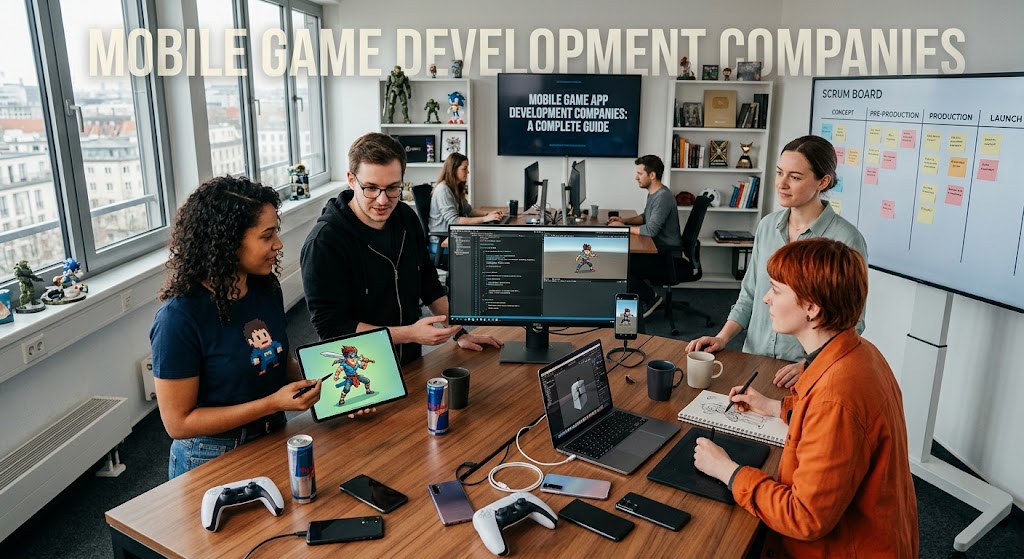
Mobile Game App Development Companies: How to Choose the Best Partner
Mobile gaming has taken over the world. Millions of people play games on their phones every single day, whether they are waiting for a bus, relaxing at home, or taking a quick break from work.
Behind every successful game is a dedicated team of creators. Working with professional mobile game app development companies can turn a simple idea into a hit app that ranks high on app stores.
Building a mobile game is not just about writing code. It requires art, sound, storytelling, and smart design. Finding the right studio ensures your project gets the attention and expertise it truly deserves.
In this guide, we will break down what these specialized studios do, how much their services cost, and how you can pick the perfect team for your upcoming project.
Why Partnering with Mobile Game App Development Companies Matters
Developing a game completely on your own is hard. You need to master game design, 3D modeling, coding, user interface design, and QA testing. That is a massive workload for one person or a tiny team.
Mobile game app development companies bring specialized professionals together under one roof. They already have the workflows, tools, and expertise needed to ship polished products smoothly.
And they know what players actually want. Experienced teams understand player retention, monetization strategies, and performance optimization across thousands of different phone models.
When you collaborate with an established team, you save time. You avoid common pitfalls that plague beginner developers and launch your title faster than doing everything solo.
Here is what a professional game studio handles during the production cycle:
- Concept creation and detailed game design documentation.
- Custom 2D and 3D asset creation, animation, and UI design.
- Core gameplay programming and engine integration using Unity or Unreal Engine.
- Quality assurance, performance testing, and bug fixing across multiple device types.
- Post-launch support, live operations, content updates, and server maintenance.
So, instead of wearing ten different hats, you can focus on your business goals while the technical experts build the actual software.
Understanding the Core Services Offered by Mobile Game App Development Companies
Not every game studio does the exact same work. Some focus strictly on casual titles, while others specialize in heavy multiplayer action games or augmented reality experiences.
Top mobile game app development companies usually offer end-to-end services, handling projects from initial sketches all the way through post-launch server support.
Full-cycle creation covers concept art, level design, mechanics prototyping, coding, sound creation, and app store deployment. It is the most seamless way to build a brand new IP.
Co-development is another common service model. If your internal team needs extra engineers or 3D artists, you can hire external specialists to accelerate your existing pipeline.
Porting services help bring desktop or console titles to iOS and Android. Specialized studios re-engineer control schemes and optimize performance so the game runs smoothly on modern touchscreens.
The table below summarizes the typical service models provided by studio teams:
| Service Type | Primary Focus | Best Suited For |
|---|---|---|
| Full-Cycle Development | End-to-end project execution from concept to store release. | Entrepreneurs and publishers with a new game concept. |
| Co-Development | Scaling team capacity with external developers and artists. | Established studios needing extra resources to hit deadlines. |
| Game Porting | Adapting existing PC or console titles for mobile hardware. | Publishers expanding popular games to mobile platforms. |
| Live Operations (LiveOps) | Managing live events, store updates, and server upkeep post-launch. | Live games requiring long-term player engagement and updates. |
Choosing the right engagement model depends directly on your team’s existing capabilities, project timeline, and overall production budget.
Look at your current team strength before reaching out. Knowing exactly where you need help makes initial conversations far more productive.
Key Technologies Used in Modern Mobile Game Creation
Building games requires powerful tools. Software engines serve as the core framework where mechanics, visual graphics, sound, and user inputs come together into a coherent product.
Unity remains the undisputed leader in mobile game development. It powers a massive percentage of top-grossing titles on both iOS and Android due to its flexibility and cross-platform ease.
Unreal Engine is the top choice for projects demanding high-end visual realism. It provides incredible lighting, physics, and graphic fidelity, making it ideal for high-budget mobile action titles.
For lighter 2D projects, platforms like Godot or Cocos2d offer streamlined workflows and lightweight builds that download quickly on mobile network connections.
Here is a breakdown of the primary tech stack elements used across leading studios:
- Game Engines: Unity, Unreal Engine, Godot, Cocos2d-x.
- Programming Languages: C#, C++, Python for backend tools, JavaScript/TypeScript.
- Art & Design Software: Autodesk Maya, Blender, ZBrush, Adobe Photoshop, Substance Painter.
- Backend & Cloud Services: AWS, Firebase, PlayFab, Photon Engine for multiplayer networking.
- Analytics & Ad Monetization: AppsFlyer, Adjust, Unity Ads, AppLovin, Google AdMob.
The choice of tech stack directly impacts performance, build size, and long-term maintainability. Experienced mobile game app development companies will guide you toward the right tech stack for your project requirements.
Always ask potential studio partners why they prefer a specific engine for your game idea before signing a contract.
How to Evaluate and Choose the Right Game Studio
There are thousands of software studios around the world. Finding the right partner takes careful evaluation, research, and clear communication from day one.
Start by examining their past portfolio. Look for games they have actually launched in the store. Play those games on your own phone to test performance, UI flow, and overall quality.
Check if they have experience in your specific game genre. A studio that builds puzzle games might struggle if you ask them to build a real-time strategy title with complex multiplayer architecture.
Communication is equally critical. You need a team that responds promptly, shares regular progress updates, and uses modern project management tools like Jira, Trello, or Slack.
Here is a quick checklist to help you evaluate potential studio partners:
- Review their portfolio and play live titles on real mobile hardware.
- Verify client testimonials, industry ratings, and verified case studies.
- Assess their technical expertise in your target genre and game engine.
- Inquire about their code ownership policies and IP rights protection.
- Evaluate their communication culture, timezone alignment, and reporting methods.
Take your time during the vetting phase. Rushing into a contract without checking references can lead to costly delays and rework later on.
Trustworthy mobile game app development companies will always offer transparent estimates, detailed production timelines, and clear legal terms.
Cost Drivers and Budget Estimates in Mobile Game Production
How much does it cost to make a mobile game? There is no single price tag because costs depend heavily on complexity, visual scope, feature sets, and team location.
A simple hyper-casual puzzle game with minimal art assets might take a few weeks to build. On the other hand, an online multiplayer RPG requires months of work from dozens of specialists.
Art direction plays a major role in pricing. Detailed 3D assets, custom animations, and complex visual effects require far more effort than simple 2D vector art or minimalist UI design.
Backend systems also add to the budget. Live servers, matchmaking systems, player inventories, and anti-cheat protection require complex backend engineering and ongoing server costs.
The table below provides general cost and timeline estimations based on game complexity levels:
| Game Category | Key Features | Estimated Timeline | Typical Cost Range |
|---|---|---|---|
| Hyper-Casual / Simple 2D | Basic mechanics, simple UI, ad monetization integration. | 1 to 3 Months | $10,000 – $30,000 |
| Mid-Core / Casual 3D | Custom 3D models, progression systems, in-app purchases. | 4 to 8 Months | $35,000 – $100,000 |
| Complex / Multiplayer Action | Real-time networking, custom backends, high-fidelity 3D graphics. | 9 to 18+ Months | $100,000 – $300,000+ |
| AR / VR Experience | Spatial tracking, custom device optimization, interactive 3D assets. | 6 to 12 Months | $50,000 – $150,000+ |
Keep in mind that these are baseline production costs. Marketing, user acquisition, and ongoing operational costs should also be factored into your total overall budget.
Plan your budget carefully before kicking off production. Leaving room for post-launch updates and fixes is essential for long-term player retention.
The Stages of Mobile Game Development Explained
Creating a successful mobile game requires a structured approach. Professional mobile game app development companies follow a proven lifecycle to keep projects on schedule and within budget.
The pre-production phase sets the stage. Teams write the Game Design Document (GDD), define mechanics, sketch concept art, and establish technical architecture before writing production code.
Next comes production. Artists build 3D models, textures, and animations, while developers program gameplay systems, UI, and backend integrations. Interactive prototypes are created early to test fun factors.
Testing happens continuously throughout development. Quality assurance teams track bugs, test device compatibility, measure frame rates, and eliminate crash triggers across various screen sizes.
Finally, launch and post-launch phases kick in. The team deploys the build to Apple App Store and Google Play, tracks analytics data, releases bug fixes, and rolls out fresh content updates to keep players engaged.
This structured workflow minimizes risks, keeps team members aligned, and ensures your final product meets high quality standards upon release.
Frequently Asked Questions
What Do Mobile Game App Development Companies Do?
Mobile game app development companies handle the entire process of creating mobile games for iOS and Android devices. They design game mechanics, create 2D and 3D visual assets, program core gameplay, conduct quality assurance testing, and publish finished games to app stores. Many studios also offer ongoing support, server maintenance, and live operations after the initial release.
How Much Does It Cost to Hire Mobile Game App Development Companies?
The cost varies greatly based on project scope, visual complexity, and backend features. Simple 2D hyper-casual titles generally cost between $10,000 and $30,000. Mid-core games with 3D graphics usually cost between $35,000 and $100,000. Complex multiplayer titles or high-end action games can easily cost $100,000 to $300,000 or more depending on development duration and team size.
How Long Does It Take Mobile Game App Development Companies to Build a Game?
Development timelines depend entirely on the scale of the game. A simple hyper-casual title can be developed in 1 to 3 months. Mid-core games usually require 4 to 8 months of development. Large-scale multiplayer games or complex 3D projects often take anywhere from 9 to 18 months from initial planning to global release on major app stores.
Which Game Engines Do Mobile Game App Development Companies Use Most Often?
Unity and Unreal Engine are the two most popular game engines used by professional mobile game development studios. Unity is widely favored for its versatility, ease of cross-platform deployment, and massive support for both 2D and 3D games. Unreal Engine is frequently selected for visually demanding projects requiring top-tier graphics performance and advanced physics rendering.
Who Retains the Intellectual Property Rights When Working with Mobile Game App Development Companies?
In standard contract development arrangements, you retain 100% of the intellectual property rights, source code, visual assets, and trademarks upon full payment. Reliable development studios will include clear IP assignment clauses in their service agreements to ensure all game assets belong exclusively to the client upon project completion.
Can Mobile Game App Development Companies Help Port Existing PC Games to Mobile Platforms?
Yes, many specialized game development studios offer dedicated porting services. They adapt game engines, redesign touchscreen user interfaces, reconfigure control schemes, and optimize graphic settings so existing PC or console games run smoothly across a wide variety of mobile phones and tablets without sacrificing gameplay quality.
Why Should I Hire Mobile Game App Development Companies Instead of Freelancers?
Hiring a full game studio provides a complete team of specialized experts working under established management structures. Studios offer dedicated game designers, 3D artists, sound engineers, developers, and QA testers simultaneously. This cohesive environment reduces project management overhead, mitigates reliability risks, and leads to higher overall product quality compared to coordinating separate freelancers individually.
Finding the right development partner is one of the most important decisions you will make for your game project. Professional mobile game app development companies provide the expertise, technical skills, and structured processes needed to turn creative concepts into market-ready titles that players love.
Take time to research studios thoroughly, evaluate their past work, discuss technical approaches, and set clear expectations regarding budgets and timelines. With the right team handling production, you can focus on building a sustainable gaming brand that thrives in today’s competitive mobile app market.
