
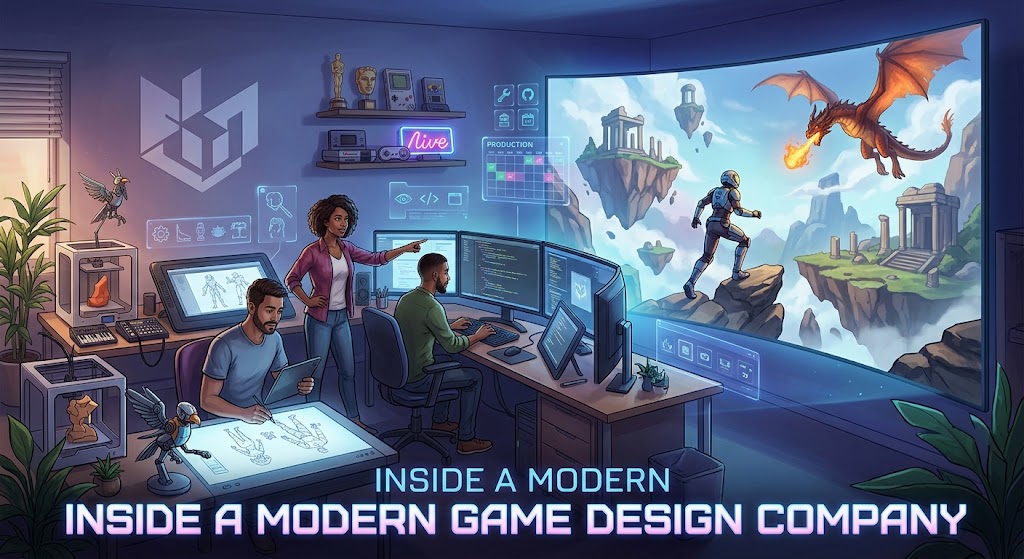
Game Design Company Strategies for Building Memorable Games
Every legendary video game starts with a single spark of an idea. Turning that initial spark into a fully functional product takes time, talent, and technical structure. That is where a professional game design company steps in to bridge the gap between creative imagination and playable reality.
Building games today is far more complex than it was a decade ago. Players expect immersive worlds, flawless mechanics, and emotional depth. Working alongside a dedicated game design company ensures your vision transforms into an engaging digital experience that keeps players coming back day after day.
Whether you want to build a casual mobile title or a massive console adventure, understanding how a studio operates is essential. Let us explore how these teams craft world-class interactive entertainment from the ground up.
What Does a Game Design Company Actually Do?
At its core, a game design company handles the end-to-end creative and technical creation of interactive titles. They do not just write code or draw character art. They construct interactive systems that keep players hooked for hours on end.
Designers focus on game mechanics, balance, pacing, and overall user flow. They determine how a character moves across the terrain, how difficult a level feels to a beginner, and how loot drops after a boss fight. Every single small detail is completely intentional.
Collaborating with an established game design company gives you access to a multidisciplinary team. From technical directors to narrative writers, every specialist brings years of industry experience to your project. This collective expertise eliminates expensive trial-and-error mistakes that often derail self-funded or inexperienced teams.
Here is a detailed breakdown of core services typically offered by an established game design company:
- Full-cycle game development from concept ideation to post-launch maintenance
- Game mechanics prototyping, grey-box level layout, and gameplay systems engineering
- UI and UX design tailored for intuitive controls and seamless player interaction
- 3D modeling, texturing, rigging, skeletal animation, and visual effects
- Narrative design, branching dialogue trees, scriptwriting, and world-building
- Quality assurance testing, multi-device optimization, bug fixing, and compliance support
- Live operations setup, analytics integration, and monetization strategy planning
This holistic approach guarantees that every system within the title works in total harmony. Without solid design foundations, even the most beautiful graphics fail to retain players over the long run.
Think of game design as architecture for virtual spaces. You need stable blueprints before laying down digital bricks. A seasoned game design company provides that structural stability so art and gameplay can thrive without system bottlenecks.
Key Phases of Production in a Game Design Company
Game creation follows a structured lifecycle to keep scope, budget, and creative execution aligned. Skipping steps often leads to major production delays, feature creep, or overwhelming technical debt. A seasoned game design company relies on clear production pipelines to deliver projects on time and within agreed budgets.
The journey starts long before developers write code or artists start sketching characters. Pre-production lays the entire foundation, while production builds the asset library and playable logic. Post-production focuses heavily on polishing, QA testing, platform certification, and launch prep.
Take a look at how production stages unfold across a standard project timeline inside a professional studio:
| Production Phase | Primary Focus | Key Deliverables | Average Duration | Primary Team Roles |
|---|---|---|---|---|
| Pre-Production | Concepting, Rules & Planning | Game Design Document (GDD), Prototypes, Style Guides | 1 to 3 Months | Game Designers, Concept Artists, Lead Tech |
| Production | Asset Creation & System Coding | Playable Alpha Build, Feature Complete Beta, Art Assets | 6 to 18 Months | Programmers, 3D Artists, Animators, Sound Designers |
| Post-Production | Polishing & Optimization | Gold Master Build, QA Sign-off, Launch Patch | 1 to 3 Months | QA Testers, Optimization Techs, Build Engineers |
| Live Operations | Updates, Patches & Monetization | Content Drops, Bug Patches, Seasonal Events | Ongoing | Community Managers, Data Analysts, Content Teams |
Each phase requires constant cross-departmental collaboration among artists, programmers, and sound engineers. Regular milestone reviews help keep everyone aligned with the original creative direction outlined in the technical specification documentation.
Prototyping early is crucial for long-term project stability. Testing core game loops early saves thousands of hours later down the line. If a core gameplay loop is not fun in grey-box form, adding high-end artwork will never fix the underlying design flaws.
A reliable game design company tests mechanics vigorously during pre-production. They iterate rapidly to nail down player movement, control feel, and combat rhythms before committing heavy resources to asset creation. This saves both time and financial investment.
Core Game Engine Technologies
Choosing the right game engine dictates your technical pipeline for years. A specialized game design company selects engine technology based on platform targets, graphic fidelity requirements, performance goals, and budget constraints.
Unreal Engine and Unity remain the industry standards for most commercial projects today. Both platforms offer robust feature sets, but they cater to slightly different project needs, graphics requirements, and developer team setups.
Here is how top game engines compare in standard game design company environments:
| Game Engine | Best Suited For | Primary Scripting | Key Strengths | Target Platforms |
|---|---|---|---|---|
| Unreal Engine 5 | AAA Consoles, PC & High-end Visuals | C++ / Blueprints | Photorealistic graphics, Nanite geometry, Lumen dynamic lighting | PC, PS5, Xbox Series X/S, High-end VR |
| Unity | Mobile, AR/VR, Cross-Platform 2D/3D | C# | Massive asset ecosystem, quick cross-platform porting, low build size | iOS, Android, PC, Consoles, Meta Quest |
| Godot | 2D Games & Lightweight 3D Indies | GDScript / C# | Open-source, completely free, lightweight footprint, fast startup | PC, Web, Mobile platforms |
| Custom Engine | Proprietary High-Performance Titles | C++ / Low-level code | Total control over architecture, zero engine royalty fees | Targeted specific hardware platforms |
Selecting an engine is a major long-term decision. Changing frameworks mid-development can stall progress for many months and cause unexpected budget inflation. A knowledgeable game design company helps guide this decision early on based on your exact commercial targets.
Beyond the engine itself, modern studios utilize modular toolsets for version control, asset management, and continuous integration. These automated systems help prevent file conflicts and ensure that team members across different time zones collaborate smoothly.
Understanding these technical pipelines is where an experienced game design company provides immediate value. They know how to optimize memory management, reduce draw calls, and keep frame rates consistent across target hardware.
Choosing the Ideal Game Design Company for Your Vision
Finding the right development partner can make or break your game title. Not all studios offer the same capabilities, artistic styles, or operational cultures. You need a team that shares your creative enthusiasm, understands market trends, and respects your target audience.
Start by evaluating past studio portfolios thoroughly. Look beyond trailer visual quality and look into actual player retention rates, user review scores, and mechanical depth across published titles. Check if they have direct hands-on experience in your chosen sub-genre.
Consider these critical factors when evaluating a prospective game design company:
- Proven track record in your specific genre, art style, and target platform
- Clear communication channels, transparent project tracking, and weekly progress reports
- Flexible engagement models like full turn-key development, co-development, or staff augmentation
- Robust quality assurance protocols, automated testing setups, and post-launch maintenance plans
- Strong understanding of modern monetization models, player economy design, and live operations
- Clear legal terms surrounding intellectual property ownership, source code delivery, and royalties
Schedule detailed discovery calls with key team leads. Ask potential partners about how they handle production roadblocks, unexpected bugs, and budget adjustments. Honest responses reveal true operational maturity and studio resilience under pressure.
Culture matters just as much as technical skill set. Smooth collaboration depends on trust, mutual respect, open feedback, and clear expectations from day one. Working with an approachable game design company makes the production journey far more enjoyable for everyone involved.
Do not hesitate to ask for client references or case studies. Speaking directly with former clients offers invaluable insight into how the studio handles tight deadlines, scope changes, and post-release support obligations.
Monetization and Player Retention Strategies
A great game must also survive commercially in a crowded marketplace. Designing monetization mechanics from the ground up prevents forced or awkward cash grabs that alienate players. A thoughtful game design company weaves commercial systems directly into core gameplay loops seamlessly.
Free-to-play titles depend heavily on battle passes, cosmetic skins, battle card unlocks, and seasonal content updates. Premium titles focus more on major expansion packs, downloadable content drops, and physical collector editions.
Here are essential player retention techniques used by modern game design company teams:
- Dynamic daily login bonuses, progressive achievement tracks, and quest rewards
- Regular content update cadence including seasonal battle passes and limited-time community events
- Skill-based matchmaking systems and fair competitive leaderboard rankings
- Active community engagement channels on Discord and player feedback integration loops
- Data-driven gameplay balance adjustments based on real-time telemetry player analytics
Balancing monetization without alienating active players is a delicate art form. When done right, players feel rewarded for their time investment rather than exploited for profit. That positive emotional connection builds long-term loyalty and drives word-of-mouth growth.
Data tracking plays a central role in modern live operations. Monitoring player drop-off points allows teams to patch friction areas quickly. Happy players stay engaged longer, participate in community discussions, and support the title enthusiastically over several years.
Ultimately, long-term success comes down to respect for the player’s time and money. A professional game design company designs ethical, engaging retention systems that benefit both the player base and the publisher balance sheet.
Frequently Asked Questions
What Services Does a Game Design Company Offer?
A full-service studio offers complete end-to-end game production. This includes concept art, narrative design, game mechanics planning, 3D modeling, programming, sound engineering, quality assurance testing, and post-launch live operations support.
How Much Does It Cost to Hire a Game Design Company?
Costs vary widely depending on project scope, artistic detail, visual fidelity, and development timeline. Simple mobile games might start around thirty thousand dollars, while complex AAA console titles often run into millions of dollars.
How Long Does It Take a Game Design Company to Make a Game?
Development timelines range from a few months for casual mobile or hyper-casual titles to several years for large open-world games. On average, mid-tier indie titles take between twelve and twenty-four months to complete.
What Is the Difference Between Game Design and Game Development?
Game design specifically focuses on rules, mechanics, level layouts, narrative flow, and overall user experience. Game development is the broader umbrella term that includes design along with programming, art creation, audio engineering, testing, and production management.
Should I Choose Unity or Unreal Engine for My Game?
Unity is often ideal for mobile titles, 2D projects, VR experiences, and rapid prototyping due to its versatility. Unreal Engine is generally preferred for high-end graphical fidelity, realistic lighting effects, and large-scale PC or console titles.
Can a Game Design Company Help With Porting to Other Platforms?
Yes, most professional studios offer cross-platform porting services. They optimize codebases, adjust graphical parameters, reconfigure control schemes, and ensure compliance with platform-specific requirements like PlayStation Network, Xbox Live, or Nintendo eShop.
How Do I Protect My IP When Working With a Game Design Company?
Protect your project ideas by signing a comprehensive Non-Disclosure Agreement before revealing deep creative concepts. Additionally, ensure the final work contract explicitly states that all intellectual property rights, assets, and source codes belong strictly to you upon milestone payments.
Building a standout video game requires passion, technical rigor, creative vision, and disciplined management. Partnering with a skilled game design company gives you the expertise needed to turn ambitious ideas into memorable, commercially viable titles. Focus on solid core mechanics, build for your audience, and enjoy the creative process of game creation.
