
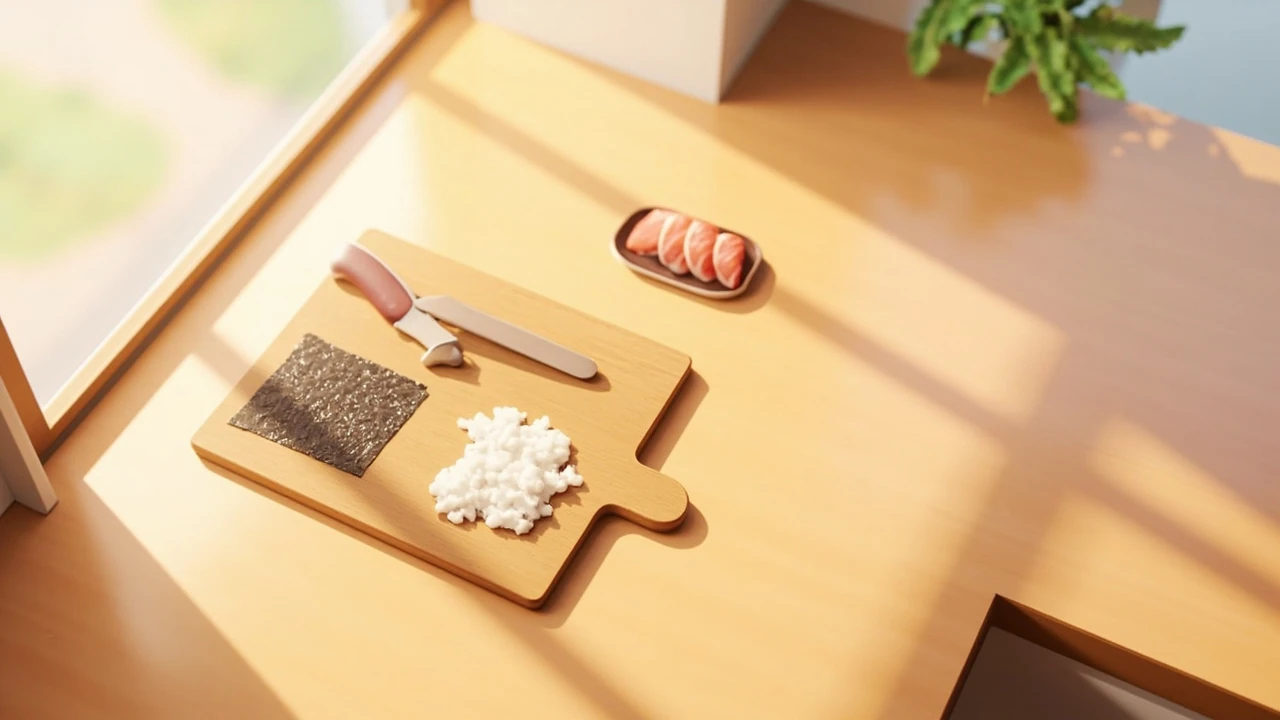
How to make sushi in Grow a Garden
Making sushi in Grow a Garden sits at the intersection of two Roblox systems: a calm farming loop and a rotating cooking event. Players grow crops, gather fish, and combine them through a kitchen bench that mirrors recipes from real cuisine, including the multi-step sushi line. The recipe behaves like a small production pipeline, where ingredient quality, the active event window, and the bench tier all influence whether the dish lands on the plate or returns a burnt result.
This walkthrough covers the full sushi workflow in Grow a Garden, the materials involved, the event mechanics that gate certain variants, and the developer-side reasoning behind why the recipe is structured the way it is. It assumes the player already has basic access to the farm, the kitchen, and the events tab. When a mechanic is version-dependent, the article flags it rather than guessing.
What the sushi recipe actually represents
At a gameplay level, sushi in Grow a Garden is a combination recipe served by the kitchen bench. It is not a single click. It is a sequence that converts raw ingredients into a plated item that grants coins, a small amount of XP, and in some cases event progress. Because the kitchen reads ingredients as typed slots, ordering matters less than completeness, but the quality of each input still shifts the reward bracket.
For developers reading this, the sushi recipe is a useful case study. It shows how a Roblox cooking system can model real recipes without forcing the player to reproduce them with pixel precision. The bench checks slot tags, not hand positions, which keeps the loop accessible while still rewarding preparation.
Prerequisites before you start cooking sushi
Before a player can reliably produce sushi in Grow a Garden, several gates have to be cleared. None of them are hidden, but they are easy to miss on a first pass because the game introduces the farm before the kitchen.
- A working farm plot with at least one tier of sprinkler coverage, so rice can be harvested consistently.
- A fishing rod or equivalent fishing tool unlocked through progression, used to pull in the required fish ingredient.
- Kitchen bench access, which becomes available once the player reaches the cooking tier triggered by the relevant NPC quest.
- Inventory space for both raw and cooked items, since the bench does not auto-stack finished plates.
- Awareness of the active cooking event window, because certain sushi variants are gated behind the event rather than the bench.
If any of those pieces are missing, the bench will still accept the request, but the output will either fail or downgrade. A developer can think of this as a soft validation chain: the recipe exists, but the inputs and event flags decide the quality of the resolution.
Step-by-step: how to make sushi in Grow a Garden
The core flow does not change between minor updates, although the specific recipe names sometimes rotate with seasonal events. The walkthrough below uses the most common baseline recipe and notes where event variants diverge.
Step 1: grow or buy the rice
Rice is the structural ingredient of every sushi plate. In the baseline recipe, the kitchen bench looks for a specific rice item rather than a generic grain tag. Players can grow rice on the farm or buy it from the in-game shop. Home-grown rice tends to evaluate at a higher quality, which shifts the reward bracket, but bought rice is acceptable for completing the recipe for the first time.
Plant rice on a tile that already has sprinkler coverage, then return to the kitchen only after the full growth timer has run. Harvesting early produces a rice item the bench will still accept, but the dish will land in the lower reward band. The game does not warn the player about this, so the quality check has to come from the inventory tooltip.
For larger batches, planting rice in the corner of a plot that has a high-tier sprinkler makes the loop close to hands-free. The growth timer is long enough that it is worth aligning a rice planting with other farm chores rather than treating it as a separate task.
Step 2: catch the fish ingredient
The fish element is the ingredient that varies the most. The kitchen bench expects a specific fish type for the baseline sushi recipe, and event variants swap in different fish tags during limited windows. Fishing works the same as it does for any other fish-based recipe: cast near the water, wait for a bite, and reel in.
Fish quality depends on the fishing tool and the player’s fishing level. Both raise the chance of pulling in a higher-grade fish, which the kitchen reads as a higher-quality input. A developer looking at this system can see it as a clean separation of concerns: the fishing system handles quality, and the kitchen only checks the result.
One practical detail that catches new players: the fish tile matters. A few fish variants only bite near specific water types, and pulling in the wrong fish is the most common reason a sushi cook returns no plate even when the other two slots are correct.
Step 3: prepare the seaweed or wrap component
The wrap is often the most overlooked ingredient, because it does not require a minigame. Players usually stock it by harvesting from a specific plant on the farm or by purchasing stacks from the in-game vendor. Keep at least one stack in reserve, because the bench consumes the wrap even when other inputs are low quality.
For developers, the wrap is a good example of a tax input. It is not the limiting factor, but the bench treats it as mandatory, which forces a steady supply chain and prevents the recipe from being spammed with stored fish and rice alone. The same pattern shows up in several Grow a Garden recipes, and it is one of the design choices that gives the cooking layer a real rhythm.
If the wrap runs out mid-session, the in-game vendor usually restocks within a short timer, but the price is higher than the farm-harvested version. The cost difference is small per plate, but it adds up over a long cook session.
Step 4: open the kitchen bench and queue the recipe
Open the kitchen bench menu and search for the sushi recipe. The bench will display a slot preview with the three ingredient types it expects. Place rice in the grain slot, fish in the protein slot, and the wrap in the designated slot. Once all three slots resolve, the bench starts a short cooking timer.
If a slot is empty or the wrong item is placed, the bench will refuse to start. That refusal is intentional: it keeps the player from burning inputs on an invalid request. The bench never partially consumes ingredients, so a failed attempt leaves the inventory untouched.
On some servers, the cooking timer pauses if the player walks out of the bench’s interaction range. It usually resumes on return, but a server rollback can wipe the queue entirely. Standing still for the duration of the cook is the simplest way to avoid that edge case.
Step 5: collect the plate and decide what to do with it
When the timer ends, the bench produces a plated sushi item. Pick it up and decide whether to sell it, consume it for its small XP bonus, or hold it for an event submission. Event windows frequently ask for finished plates rather than raw ingredients, so the choice between cooking now and banking, or cooking later and submitting, changes the value of each plate.
For a player who is not chasing event progress, selling the plate is the most predictable outcome. For a player who is, banking four or five plates and waiting for the next event submission window is usually the more profitable path, because event payouts are priced above the bench’s sell value.
Event windows and the sushi variants you can run into
Grow a Garden runs cooking events that swap or extend the recipe list. During those windows, the kitchen bench adds new sushi variants tied to the event’s theme, such as a holiday-specific fish or a limited wrap type. The base recipe stays available, but event variants often reward more coins or contribute to an event progress meter that gates cosmetics.
From a player perspective, the practical advice is simple: read the active event tab before committing time to a sushi run. The ingredients for an event variant may be completely different, and the bench will not auto-substitute. A common rookie mistake is to assume the bench will adapt, then watch a stack of stored plates fail the event check.
Event variants also tend to have stricter quality floors. A baseline recipe that accepts any fish might, during an event, require a tagged fish that only spawns in a specific water type. That extra step is what makes event sushi feel like a separate recipe rather than a reskin of the baseline.
| Sushi variant | Typical grain | Typical protein | Wrap component | Availability |
|---|---|---|---|---|
| Baseline sushi | Standard rice | Common fish | Seaweed | Always |
| Premium sushi | High-quality rice | Rare fish | Seaweed | Always, higher reward |
| Event sushi | Event-specific grain | Event-tagged fish | Event wrap | Limited event window |
| Combo plate | Standard rice | Fish plus a second tag | Seaweed | Mid-event only |
The exact names in the table reflect the kind of slots the bench resolves against, not invented drop names. If a current event swaps the protein, the row that matters is the one whose protein field matches the active tag.
Reward tiers and how quality changes the outcome
Reward tiers in the kitchen follow the same logic as the rest of Grow a Garden: ingredient quality sets a multiplier on the base coin reward, and the bench uses the lowest quality among the three inputs as the floor. That means a single low-quality wrap can drag a high-quality plate down a tier, which is the most common reason a player wonders why their sushi did not pay well.
For a developer audience, the floor system is a clean way to enforce balanced preparation. It prevents the most common farming shortcut, which would be to stock a single high-value ingredient and skip the rest, and it forces the player to manage the supply chain as a whole. The same approach shows up in several other Roblox cooking games, and it is one of the more durable design patterns in the genre.
In practice, the floor mechanic means the cheapest input defines the value of the plate. A player who upgrades wrap and fish but ignores rice quality will see the same reward as a player who upgrades rice and fish but ignores wrap quality. Reading the inventory tooltips before queuing a cook saves a surprising amount of rework.
Common mistakes and how to avoid them
Most failed sushi attempts fall into a small set of repeatable errors. Listing them out is more useful than burying the diagnostic logic in prose.
- Submitting low-quality wrap because the player assumes wrap quality is irrelevant. The bench uses the lowest input as the floor, so a low-quality wrap is the most common cause of a low reward.
- Fishing at the wrong water tile. Some fish variants are tied to specific water types, and a wrong tile returns a fish the bench does not recognize for sushi.
- Cooking outside the event window for a limited variant. The bench will accept a request, but it will cook the baseline version instead.
- Letting the cooking timer run while the player wanders. A few seconds of being out of range can cancel the bench queue on some servers, and the bench does not always refund the inputs.
- Selling the plate immediately when an event is about to start. Banks of plates often pay better as event submissions than as raw sell value.
- Reading the slot preview too quickly and missing an event tag. The bench shows the current tags, but they change between event windows, and trusting memory is a frequent source of wasted inputs.
Each of these is a small adjustment rather than a deep system change. That is part of the design intent: the recipe should be learnable in a single session but rewarding enough to optimize over a longer arc.
How a developer can read the sushi recipe as a system
Treating the recipe as a small production system makes it easier to think about similar recipes in similar Roblox games. The kitchen in Grow a Garden models cooking as a tagged-slot resolution rather than a minigame, which keeps the player focused on supply chain decisions. The recipe is also a way to gate progression without locking the player behind a wall: missing ingredients cause a soft failure, not a hard block.
For studios working on similar systems, the practical takeaways are straightforward. First, define ingredient tags before designing the bench, because the bench will inherit whatever taxonomy the inventory uses. Second, treat quality as a multiplier on the lowest input, not the average, to discourage shortcutting. Third, gate event variants through ingredient availability rather than through a new menu, so the kitchen remains the single point of contact for cooking.
It is also worth noting how the recipe rewards preparation without punishing experimentation. A failed cook refunds its inputs, which means a player who tries a slot combination they have not seen before loses nothing but a few seconds. That choice keeps the kitchen approachable and is one of the reasons the recipe has stayed part of the rotation across multiple updates.
Timing, server behavior, and version notes
Several quality-of-life details in the sushi loop depend on the server and the current version of the game. The notes below capture the parts that are most often reported by players and that are relevant to a developer audience.
- Cooking timers are short, but they pause if the player leaves the bench’s interaction range on some servers. Returning to the bench usually resumes the timer, but it can also cancel the queue during a server rollback.
- Event windows are usually announced in the in-game events tab. Outside those windows, the kitchen falls back to the baseline recipe even if the player owns event ingredients.
- Recipe slots are typed. The bench will not accept a substitute item even if it looks identical, which is a common source of confusion when a new event introduces a similar-looking ingredient.
- Inventory overflow silently fails the cook. If the player’s inventory is full, the bench does not drop the plate to the ground; it cancels the request without consuming inputs on some clients, and on others it consumes the inputs anyway. Test before assuming.
- Server population can change the bench’s responsiveness. On crowded servers, the cooking timer can stretch slightly, and a few players have reported input refunds that match the rollback behavior rather than a clean cancel.
Reading the recipe against the wider game design
Comparing the sushi recipe to other Grow a Garden recipes is a useful way to see the design philosophy in one place. The kitchen treats every recipe as a small assembly problem, and the sushi recipe is the version that asks for the most balanced input set. Other recipes lean harder on a single ingredient, but sushi sits at the middle of the design curve, which is why it is often the first recipe players optimize when they start chasing event progress.
That balance is also why the recipe is a good teaching example. A player who understands the sushi floor mechanic can apply the same logic to higher-tier recipes, and a developer who understands the same mechanic can reuse the design in a different game without rewriting the bench. The pattern is portable, and the Grow a Garden kitchen is one of the cleaner implementations of it on Roblox.
For a developer reading the recipe as a case study, the interesting questions are not about sushi specifically. They are about how the bench keeps the player focused on supply chain decisions while keeping the cooking loop accessible. The sushi recipe is the example that shows both halves of that trade-off in a single screen.
Validating that a sushi cook actually worked
Validation is a habit worth building, because the bench’s silent failures can be misleading. The simplest check is the inventory: a successful cook adds exactly one plated item and consumes three inputs. If the inventory shows the same item count, the cook failed and the bench refunded. If the inventory shows fewer inputs but no plate, the queue likely cancelled mid-cook, and a second attempt is worth queuing.
For developers, the validation step mirrors a unit test on the bench’s input/output contract. The bench is expected to be transactional: either all three inputs are consumed and a plate is produced, or the request is rejected and no inputs are consumed. Server behavior during a rollback can break that contract, which is one of the more interesting edge cases to track in QA. Logging both the input tags and the resulting state is usually enough to catch the failure mode in playtests.
How the sushi loop fits the wider Grow a Garden economy
The recipe does not exist in isolation. It is one node in a wider economy that includes crop sales, fish sales, and other recipes that share the same kitchen. The kitchen is a sink for high-quality ingredients, and the sushi recipe is one of the more profitable sinks when the player has all three ingredients at a similar quality. That is the underlying reason the recipe feels rewarding: it is a clean way to convert a balanced stockpile into a single high-value plate.
A useful way to read the economy is to think of each ingredient chain as a small factory. The farm is the raw materials line, fishing is a separate raw materials line, and the kitchen is the assembly plant. When all three lines are healthy, sushi becomes a steady source of coins. When one of them is starved, the recipe underperforms, and the bench ends up sitting idle because the player is waiting on the slowest line to recover.
For a studio reading the system, that is the most important takeaway. The kitchen is a coordination problem as much as a cooking problem, and the sushi recipe is a good example of how a Roblox game can model real-world supply chain decisions in a way that remains accessible to younger players. The wider history of the title, including its rapid growth inside Roblox, is covered in the Grow a Garden Wikipedia entry, which provides useful background for this point. The game’s reach inside Roblox and the audience it has pulled in is also described in the Massively Overpowered profile of Grow a Garden, which puts the recipe in the context of the broader design.
Practical checklist before queuing another sushi cook
Run through this short checklist any time the recipe is part of an event push. It catches the small misses that compound over a long cook session.
- Confirm the active event tab and read the recipe description for any swapped ingredients.
- Verify the kitchen bench is the correct tier, since higher tiers unlock some event variants.
- Check inventory space and clear at least four slots to avoid a silent cancel.
- Stand within the bench’s interaction range for the full cooking timer.
- Hold finished plates for the event submission window if the event is still running.
- Recheck the slot preview after every event rollover, since the tags can change without warning.
Where to take the recipe next
Once the baseline sushi loop is stable, the natural next step is to look at the recipes that share the same kitchen. Premium sushi, combo plates, and the rotating event variants use the same supply chain, so the work invested in the baseline carries over. The kitchen is also a good place to test a player’s understanding of the farm layer, because it forces them to balance three inputs rather than max out a single one.
For developers, the same coordination pattern shows up in larger production pipelines. A healthy system is one where every line is producing at a similar rate, and a stalled line is the first thing to fix. The kitchen makes that lesson visible to a player base that might not see it in any other context, which is part of why the recipe has held up across multiple updates.
FAQ-style quick reference
The block below compresses the most common player questions into a short table. It is meant to live next to the longer walkthrough rather than replace it, since the bench behavior can shift with events and updates.
| Question | Short answer |
|---|---|
| Do I need high-quality rice to make sushi? | No, but it raises the reward tier. Baseline rice is enough to complete the recipe. |
| Can I use any fish in the kitchen? | Only the fish type the bench expects. The bench will not accept a substitute. |
| Why did my sushi burn? | It did not burn in the visual sense; the bench returned no plate because a slot was empty or wrong. |
| Why was the reward low? | The bench uses the lowest input quality as the floor, so a low wrap or fish drags the reward down. |
| Can I cook sushi outside an event? | Yes, the baseline sushi recipe is always available. Event variants are time-gated. |
| Do plates stack in the inventory? | Plates stack up to a small per-item cap. Excess plates need a bank or a sell trip. |
Frequently asked questions
How to make sushi in Grow a Garden for the first time?
Open the kitchen bench, place rice, a common fish, and seaweed into the recipe slots, and start the cook. The bench will produce a baseline sushi plate as long as all three slots resolve to the expected tags.
What ingredients do I need to make sushi in Grow a Garden?
You need rice, a specific fish, and a wrap component. The wrap is usually seaweed, but event variants can swap it for a limited ingredient during seasonal events.
Does fish quality change the sushi reward?
Yes. Fish quality is one of the three inputs the bench uses to set the reward tier, and the bench uses the lowest input as the floor for the plate’s value.
Can I cook sushi without joining the active event?
Yes. The baseline sushi recipe is always available. Event-tagged variants are limited to their event windows, and the bench will not auto-substitute ingredients outside those windows.
Why is my sushi reward lower than expected?
The bench uses the lowest input quality as the reward floor, so a low-quality wrap or fish is the most common cause. Upgrade the lowest input and the reward tier usually moves up.
Where is the kitchen bench in Grow a Garden?
The kitchen bench sits in the cooking area near the farm hub. It unlocks once the player reaches the cooking tier triggered by the relevant NPC quest, which is usually a short progression step after the first farm upgrade.
How long does the sushi cooking timer take?
The timer is short, on the order of a few seconds of in-game time. The bench pauses if the player leaves its interaction range, which is the most common reason a queue appears to stall.
Can I store sushi plates for later events?
Plates persist in the inventory, and most events accept finished plates rather than raw ingredients, so banking plates is often more profitable than selling them on the spot.
Does the sushi recipe change between updates?
The baseline recipe is stable, but event variants and seasonal sushi lines rotate. The bench always shows the current recipe description, so read the slot tags before queuing a cook.
What should I do if the kitchen bench will not accept my fish?
Check the active event tab and the recipe description. The bench rejects fish that does not match the expected tag, which is the most common reason a player thinks the recipe is broken.
