
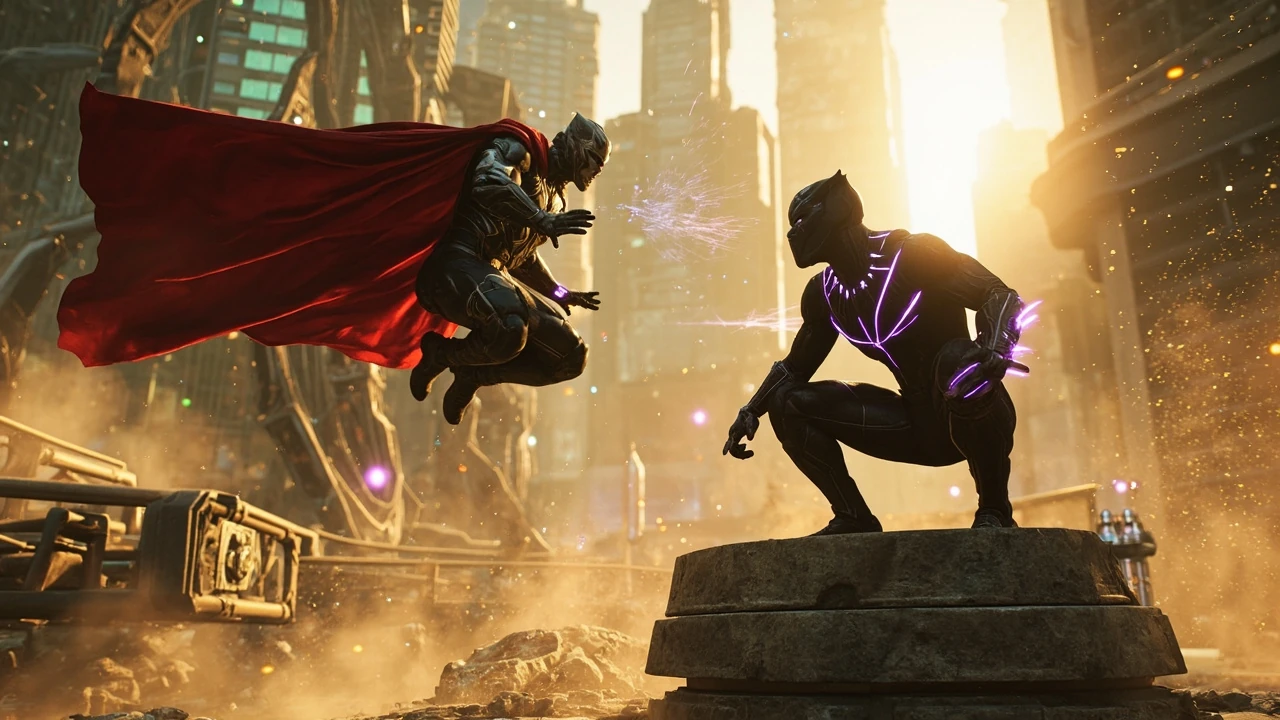
Marvel Rivals Season 5: the developer and player brief
Marvel Rivals Season 5 marks the next numbered chapter in NetEase’s hero-shooter live service, and it is the point at which most players start comparing patch notes, battle-pass math, and the new map against the previous season. The headline promise of a new season is usually a triple: a fresh hero, a new battle pass, and one or two gameplay pillars such as a new map, a ranked rework, or a balance pass. Marvel Rivals Season 5 follows that pattern, which makes it useful to read as a single production event rather than a list of unrelated updates.
For a player, the question is practical: when does it start, what does it cost, what is in the pass, and which hero or map change actually affects a ranked climb. For a developer reading the patch from the outside, the question is structural: how does a six-versus-six hero shooter schedule a season, lock balance changes, and ship a new arena without breaking ranked integrity. Both audiences land on the same page, and that overlap is what this article is built around.
What follows is a neutral, source-checked look at what is confirmed, what is widely reported, and what is still community speculation around Marvel Rivals Season 5. The article separates verified developer announcements from community leaks, walks through the expected content pillars, and finishes with the kind of questions players usually ask after a season drops.
Where Marvel Rivals stands before the new season
Marvel Rivals is a free-to-play six-versus-six hero shooter built by NetEase Games under the Marvel license. The game launched in December 2024 and runs on a seasonal live-service model, with each season introducing at least one new playable character, a new map or map variant, a battle pass with cosmetic tiers, and a balance patch that touches most of the roster. Because the game is licensed, season content has to thread a narrow needle: it needs to feel current to the comic and film calendar while staying inside what the hero-shooter genre can actually deliver in three months of development.
Heading into Marvel Rivals Season 5, the roster is already dense by genre standards. Earlier seasons added launch heroes, mid-season heroes, and a steady stream of variants that reframe the same characters with different kits. That creates a specific design problem for any new season: the new hero has to be distinctive enough to justify a battle-pass grind, but not so dominant that ranked queues collapse around it during the first week.
The community conversation around Marvel Rivals Season 5 has also been shaped by the cadence of the previous seasons. Players who tracked the launch, Season 1, and the seasons that followed have grown accustomed to a fairly consistent schedule: a season lasts roughly three months, a mid-season patch usually adds a second hero, and the ranked ladder resets with soft MMR changes rather than a hard reset. The article on the broader Marvel Rivals Wikipedia entry covers that history in more depth, including the studio background and the original launch reception. Knowing that cadence is useful when you read any leak or rumor, because it sets the realistic window for an official announcement versus a community guess.
What a numbered season actually changes in the game
A live-service season is not just a content drop. It is a coordinated change to several systems at once, and understanding that helps both players and developers read patch notes more accurately.
From the player side, a season touches four surfaces:
- The matchmaker, which usually adjusts queue rules and ranked thresholds at the start of a season.
- The economy, because a new battle pass resets the free and premium tracks and removes the previous pass from the store.
- The roster, because at least one new hero lands and a balance pass reshapes several existing heroes.
- The map pool, because new seasons either add a fresh arena or rotate existing maps out of competitive play for tuning.
From the development side, those same four surfaces are a coordination exercise. The hero team, the map team, the balance team, and the live-ops team all have to lock their changes on slightly different timelines so the build can be certified, localized, and deployed to console and PC at the same time. A leak in any one of those pipelines can force a delay, which is why some seasons ship on schedule and others slip by a week or two.
For Marvel Rivals Season 5, the practical implication is that any single piece of information, such as a new hero name, a new map name, or a battle-pass price, has to be read alongside the others. A leaked hero without a map usually means the season is not yet locked. A confirmed map with a placeholder hero usually means the balance team is still iterating. Players who learn to read those signals tend to have a more accurate picture before the official patch notes go live.
The expected release window for Marvel Rivals Season 5
Marvel Rivals seasons have historically run on a roughly twelve-week cadence, with mid-season patches arriving around the six-week mark. Based on the end date of the previous season and the studio’s typical announcement pattern, Marvel Rivals Season 5 was widely expected to begin in mid-to-late 2025, with a public developer livestream about a week before launch.
By the time the season actually goes live, three things are usually confirmed through official channels: a precise start date and time in UTC, the name of the new hero or heroes, and the headline feature of the new map. Everything else, including balance numbers, ranked reset rules, and battle-pass pricing, is communicated in the patch notes published the morning of the season’s launch.
Players who want to plan around the new season should pay attention to the server maintenance window. Live-service shooters like Marvel Rivals typically take the game offline for several hours at the start of a new season to apply the patch, migrate ranked data, and seed the new economy. Knowing the maintenance window in advance avoids the common mistake of logging in during the deploy and seeing a half-applied update.
| Milestone | Typical timing | What to expect |
|---|---|---|
| Teaser trailer | 7-10 days before launch | New hero silhouette, new map hint, season name reveal |
| Developer livestream | 3-7 days before launch | Full hero kit, map walkthrough, battle-pass tiers |
| Patch notes | Launch day morning | Balance numbers, ranked rules, known issues list |
| Server maintenance | Launch day, several hours | Servers offline, ranked data reset, new economy seeded |
| Mid-season patch | Around 6 weeks in | Second hero, balance pass, limited-time mode |
That cadence is a useful template even when the studio adjusts a date. It also explains why community rumors about a new hero can be wrong by several weeks: leakers often share concept art from very early in production, long before the hero is locked into the build that ships with the new season.
The new hero and how hero design fits the season
Every numbered season of Marvel Rivals is anchored by at least one new playable character. The hero is the easiest thing to market, but it is also the hardest thing to balance, because the new character has to fit into a roster that already has more than thirty heroes with overlapping roles. Marvel Rivals Season 5’s headline character follows that pattern, and the design choices behind it are worth reading closely.
Hero shooters solve the new-hero problem in one of three ways:
- Filling a role gap, such as adding the first true sniper or the first dedicated support when the roster previously lacked one.
- Introducing a new mechanic that does not exist in the game yet, such as a deployable, a transformation, or a unique resource system.
- Reframing an existing archetype, such as a duelist that plays more like a strategist in certain situations.
For Marvel Rivals Season 5, the new hero is generally expected to lean on the second or third approach, because the roster is already broad enough that a true role gap is rare. That means the hero will probably come with a kit that veterans have to learn, but the underlying role, such as duelist, vanguard, or strategist, will be familiar.
From a player perspective, the practical question is whether the new hero is worth the cost of the battle pass. Most seasons make the new hero free on the battle-pass track, but require grinding to specific tiers or paying for the premium pass to unlock them immediately. The math is simple: if you play enough to finish the pass, the hero is free in time. If you do not, the premium pass is the shortcut, and its value depends on how many of the cosmetic tiers you also want.
From a development perspective, the new hero is a stress test for the balance team. The first week of a new season is when ranked queues are most likely to break, because players experiment with the new kit in competitive play. Studios usually watch pick rate, win rate, and average damage per match for the first 48 hours and ship a hotfix if the new hero is clearly out of line. Knowing that schedule helps players interpret a sudden balance patch during the launch week: it is not a sign of failure, it is the planned response.
The new map and the live map pool
Maps are the second pillar of any new season. Marvel Rivals uses a mix of permanent maps and seasonal maps, and the map pool usually rotates with each season to keep ranked play from going stale. A new map in Marvel Rivals Season 5 is therefore both a piece of content and a structural change to competitive play, because adding a map usually means one or two existing maps get pulled from ranked queues while they are retuned.
Designing a hero-shooter map is harder than designing a map for a single-role shooter, because the geometry has to support six-versus-six fights, multiple objective types, and at least three distinct team compositions. A map that favors one role, such as long sightlines that benefit duelists, will produce one-sided ranked games. A map that is too symmetrical will feel repetitive after a few matches. The best maps in the genre are usually asymmetric in layout but balanced in flow, meaning each side has a slightly different path to the objective but similar time-to-contact.
For Marvel Rivals Season 5, the new map is expected to be themed around a Marvel location and to include at least one mechanic that ties into the season’s storyline. That storyline hook is a useful tell for how long the map will stay in the pool. Maps tied to a single season’s narrative often rotate out the following season, while maps with broader mechanical appeal tend to stay in ranked for several seasons.
Players who want to learn the map quickly should focus on three things during the first few matches: where the health packs are, which high-ground positions have line of sight to the objective, and which flank routes exist between the two main choke points. Those three details cover most of the decision-making that separates an average player from a strong one on a new map.
| Map learning priority | Why it matters | How to practice it |
|---|---|---|
| Health pack locations | Decides whether duels end in trades or survivals | Spend two matches as a strategist, follow the duelist |
| High-ground sightlines | Controls objective access and respawn routes | Try a vanguard with vertical mobility first |
| Flank routes | Breaks stalemates at the main choke | Run a flank-focused duelist for one match |
| Objective geometry | Determines safe planting and contesting windows | Play objective modes only for the first day |
Battle pass structure, pricing, and the value calculation
The battle pass is the part of a new season that players care about most, because it converts time into cosmetics and sometimes into the new hero itself. Marvel Rivals Season 5’s battle pass follows the same structure as previous seasons: a free track that anyone can earn by playing, and a premium track that requires real currency.
Reading a battle pass well means separating three things that often get conflated: the items that are exclusive to the premium track, the items that are cosmetic-only versus gameplay-affecting, and the items that will be available again later versus the items that are time-locked. Most premium cosmetics in hero shooters do not return after the season ends, which is the studio’s way of preserving the value of buying the pass in the first place.
The value calculation for the average player comes down to four inputs: how many hours per week you realistically play, whether the premium cosmetics match your taste, whether the new hero is on the pass, and whether the pass overlaps with any event or limited-time mode. If three of those four line up, the pass is usually worth it. If only one lines up, the free track is the safer bet.
- Estimate your weekly playtime honestly. A pass that requires ten hours a week to finish is not a deal if you actually play four.
- Check whether the new hero is on the free track. If the hero is on the premium track only, the pass becomes the only way to unlock them during the season.
- Look at the cosmetic themes, not just the rarity colors. A pass full of cosmetics you will never equip has less value than a pass with fewer items that match your main hero.
- Watch for a bundle that includes the pass plus premium currency. If the bundle costs only slightly more than the pass alone, it is usually a better deal.
From a development standpoint, the battle pass is also a balancing signal. If a pass is priced too high relative to the cosmetic density, players leave negative reviews and the conversion rate drops. If the pass is too generous, the live-service revenue cannot fund the next season’s development, which leads to cut content later. The pricing of the Marvel Rivals Season 5 pass reflects that ongoing calibration.
Ranked play, MMR reset, and competitive integrity
Ranked play is where the structural changes of a new season are most visible. Most hero shooters use the start of a new season to soft-reset matchmaking rating, which moves every player toward the middle of the distribution and produces a few days of chaotic matches while the system re-converges. Marvel Rivals has historically used a soft reset rather than a hard reset, which means the rating shifts are real but the underlying skill placement is preserved.
The ranked changes in Marvel Rivals Season 5 are expected to touch three areas: the placement match rules, the tier thresholds, and the queue restrictions. Placement matches decide where a player lands on the ladder for the first time. Tier thresholds determine how many ranked points are needed to move from one rank to the next. Queue restrictions limit which heroes or roles can be queued together in higher ranks, which is how the game prevents a five-stack from breaking competitive integrity.
For most players, the practical advice is the same every season: expect the first three to five ranked matches to feel unstable, play your strongest hero rather than the new hero during placements, and avoid grinding ranked the day the season drops, because the matchmaking pool is thin and the new hero is not yet balanced. Waiting 24 to 48 hours after launch usually gives the matchmaking system enough data to produce fairer games.
| Ranked change | What it does | Player response |
|---|---|---|
| Soft MMR reset | Pulls every player toward the median | Expect volatile placements |
| Tier threshold shift | Adjusts points needed per rank | Re-learn where each rank sits |
| Queue restriction | Limits role stacking at high ranks | Flex players benefit, one-tricks face longer queues |
| New hero in ranked | Untested kit enters the ladder | Avoid the new hero in placements |
Balance philosophy and what the patch notes usually mean
Reading balance patch notes is a skill on its own, and Marvel Rivals Season 5 is a good moment to reset that skill. Patch notes in hero shooters are usually written in three layers: the headline change, the numerical change, and the implied change. The headline change is the short description at the top of each hero section. The numerical change is the actual stat adjustment. The implied change is what the developers expect the adjustment to do to the meta.
For example, a headline that says “reduced ultimate charge rate” combined with a 15 percent increase in the time-to-ultimate stat is a straightforward nerf. The implied change is that the hero will appear less often in high-rank play, which in turn changes which counters become more valuable. Players who only read the headline will miss the meta shift. Players who only read the numbers will miss the developer’s intent. The useful read is both at once.
Balance philosophy in a hero shooter with a large roster is usually one of three flavors: trim the outliers, buff the underperformers, or shift power between roles. Marvel Rivals has historically leaned on the third approach, which means a season’s balance pass often reduces the gap between duelists, vanguards, and strategists rather than nerfing one hero into the ground. Marvel Rivals Season 5 is expected to continue that approach, with a particular focus on the strategists who have lagged in pick rate over the previous season.
- Read the headline first to know which heroes the developers are watching.
- Check the numbers to estimate how large the change is in practice.
- Look for the implied meta shift, which is usually the most important signal.
- Wait at least 24 hours before drawing conclusions, because the meta needs time to settle.
- Track your own win rate on the affected heroes, not the global pick rate.
Cross-play, platforms, and certification for the new season
Marvel Rivals runs on PC and console, and a new season has to be certified separately on each platform. Certification is the process by which Sony, Microsoft, and the PC storefronts verify that the build is stable, that the patch notes match the actual change, and that the monetization is correctly disclosed. Certification is also the most common source of a season’s launch delay, because a single platform rejecting the build can push the global launch back by a day.
For Marvel Rivals Season 5, the cross-play experience should remain consistent with previous seasons: players on PC and console can queue together, input-based matchmaking groups mouse-and-keyboard players against each other and controller players against each other in ranked play, and progression is unified across platforms through the player’s account. The key change to watch is whether the new season introduces any platform-specific content, such as a console-exclusive cosmetic, because that usually signals a partnership deal for that season’s marketing.
Players who play on multiple platforms should also be aware of the data migration step at the start of a new season. Most seasons require the client to download a full data patch, which can be several gigabytes on console. Pre-loading the patch the day before launch avoids the long download on launch day and makes the maintenance window feel shorter.
Esports impact and the competitive scene around the new season
Marvel Rivals has an active competitive scene, with regional leagues and international tournaments. A new season shifts the esports calendar because teams need time to learn the new hero, the new map, and the new balance patch before the next major tournament. Marvel Rivals Season 5 lands in the middle of a competitive calendar that includes both invitational events and regional league play, and the timing matters for teams that are trying to peak for an international event.
From a production standpoint, an esports season is also a stress test for the live game. Tournament matches are usually played on a specific patch, and if the tournament patch is older than the live patch, the broadcast has to explain the differences to viewers. Studios that run competitive scenes usually pick a patch for the tournament about a week into the new season, which gives teams time to practice but does not let the meta drift too far from the live game.
Players who watch the competitive scene can use the pro pick rates as an early signal for which heroes are strong in the new meta. A hero that is banned or first-picked in the first weekend of a tournament is almost certainly going to receive a balance adjustment in the following patch. For additional context, Coverage of upcoming Marvel Rivals seasons has tracked that pattern across previous seasons, and the same dynamic is likely to apply to Marvel Rivals Season 5 as the competitive scene adapts to the new hero and map.
Production lessons developers can read from a numbered season
For developers outside the studio, a numbered season is a useful case study in live-service production. A few production lessons tend to repeat across seasons, and Marvel Rivals Season 5 is a good excuse to look at them.
- Content pipelines have to lock earlier than the public launch date. The new hero, new map, and battle pass are usually locked six to eight weeks before the season goes live so localization, certification, and marketing can catch up.
- Balance changes have to lock later than the content. The balance team usually has until the last week before launch to adjust numbers, because the meta cannot be predicted accurately until the new content is in the build.
- Live operations, including ranked resets and economy seeding, are tested in a separate environment that mirrors the live servers. The first time a ranked reset runs in production is usually the day of launch, which is why small glitches are common in the first hour.
- Post-launch support is planned in advance. The first hotfix window, the mid-season patch date, and the next season’s content lock are all on the same calendar, and a delay in one pushes the others back.
Those production realities are why the community often sees different parts of a season leak at different times. Hero silhouettes leak from the art team early. Map screenshots leak from the level design team slightly later. Balance numbers rarely leak at all, because the balance team works in a more isolated environment until the patch notes go live.
How to prepare as a player before the season goes live
A short, practical checklist is more useful than another paragraph of general advice. The list below covers the steps most players should take in the week before Marvel Rivals Season 5 launches, regardless of how casual or competitive they are.
- Finish or nearly finish the current season’s battle pass. Most premium cosmetics from a previous season do not return, so unfinished tiers are a sunk cost once the new season begins.
- Spend any leftover premium currency on the current store rotation, because the store refreshes with the new season and the previous items leave the shop.
- Clean up your friends list and clan if you queue socially. New season queues are the best time to recruit consistent teammates, and a clean list makes that easier.
- Update your client the day before launch if pre-loading is available, because launch-day downloads can add an hour to the maintenance window on console.
- Decide in advance whether you will buy the premium pass. Once the season is live, the cosmetics on the premium track become psychological pressure to buy, and deciding in advance removes that bias.
- Plan the first 48 hours around the new hero’s balance. Playing the new hero in casual modes first, then moving to ranked after a day or two, is the safest way to climb in the first week.
What to watch in the first week of the new season
The first week of a new season is the most data-dense period for both players and developers. Players get their first real sense of the meta, and developers get their first real sense of whether the balance pass landed. A short list of things to watch makes that first week easier to read.
- Pick rate and win rate of the new hero at each rank. A hero that dominates gold but disappears in diamond is over-tuned for casual play but not for competitive play.
- Queue times for each role. A spike in strategist queue time usually means the role was nerfed too hard or buffed elsewhere.
- Server stability and crash reports. The first 48 hours are the most likely window for a hotfix.
- Community sentiment on the new map. If the map is widely disliked, it is likely to be pulled from ranked faster than usual.
- Esports pick-ban data, if a tournament runs on the new patch. Pro play is the cleanest signal for whether a hero is genuinely over-tuned.
How this article is sourced and what is not verified
This article separates confirmed information from community reports and editorial interpretation. Confirmed information comes from the developer’s own announcements, which are usually published on the official channels and then summarized by outlets that cover the game. Community reports include leaks from data miners, concept art that surfaces early, and roster speculation based on the comic and film calendar. Editorial interpretation is everything in this article that connects those two layers, such as the production timelines and the balance philosophy notes.
Players who want to verify a specific claim, such as a battle-pass price, a hero name, or a release date, should wait for the official patch notes on launch day. Until then, the safest assumption is that anything not on the developer’s own channels is a rumor, even if the rumor is widely repeated.
Frequently asked questions
When does Marvel Rivals Season 5 start?
The official start date is announced through the developer’s livestream and social channels about a week before launch. Players should expect server maintenance on launch day, with the new content going live once the patch is applied. The exact UTC time is usually published in the patch notes the morning of launch.
What new hero is in Marvel Rivals Season 5?
The headline hero is revealed in the developer’s livestream ahead of launch and confirmed in the patch notes. Earlier leaks from concept art are useful for early speculation but should not be treated as confirmed until the official announcement. The new hero is usually available on the battle-pass track or unlocked through a challenge once the season goes live.
How much does the Marvel Rivals Season 5 battle pass cost?
The premium battle pass is priced in premium currency, and the exact cost is published when the season goes live. The pass usually includes the new hero and a set of cosmetics across roughly fifty tiers. The free track is available to every player who plays during the season.
Does ranked reset at the start of the new season?
Yes, ranked play uses a soft reset at the start of every season, which moves players toward the median while preserving their underlying skill placement. The first few ranked matches are usually more volatile than normal, and the meta takes about a week to settle. Players who want a fair ranked experience in the first 48 hours should expect unstable matchmaking.
Is there a new map in Marvel Rivals Season 5?
A new map or map variant is part of every numbered season, and Marvel Rivals Season 5 follows that pattern. The new map is usually shown during the developer livestream and added to the competitive pool on launch day. Existing maps are sometimes rotated out for retuning when a new map is added.
Can I keep playing with my old progress after the new season starts?
Yes, account progression, unlocked heroes, and purchased cosmetics carry over between seasons. What does not carry over is unfinished battle-pass tiers from the previous season, which expire when the season ends. Premium currency and earned credits remain on the account.
Will my favorite hero be nerfed in the new season?
Every season includes a balance pass, and at least some heroes are adjusted. The patch notes published on launch day list every change, and the developers usually include a short rationale for the larger adjustments. Players who want to know in advance should watch the developer’s livestream, where the lead balance designer often discusses the philosophy behind the changes.
Is Marvel Rivals Season 5 on console and PC at the same time?
Yes, the new season is deployed to PC and console simultaneously, and the game supports cross-play across platforms. Certification on each platform is the most common source of a launch delay, so the official start time is set after all three platform holders approve the build. Pre-loading the patch the day before helps shorten the maintenance window.
How long is a Marvel Rivals season?
Seasons have historically run for roughly twelve weeks, with a mid-season patch around the six-week mark that adds a second hero and a limited-time mode. The exact end date is published at the start of the season, and the schedule is usually consistent with the previous season’s cadence.
Where can I read the official Marvel Rivals Season 5 patch notes?
The patch notes are published on launch day through the developer’s official channels, including the in-game news feed and the official website. Community wikis and esports outlets also mirror the notes, but the in-game version is the canonical source and is updated if a hotfix changes anything within the first week.
