
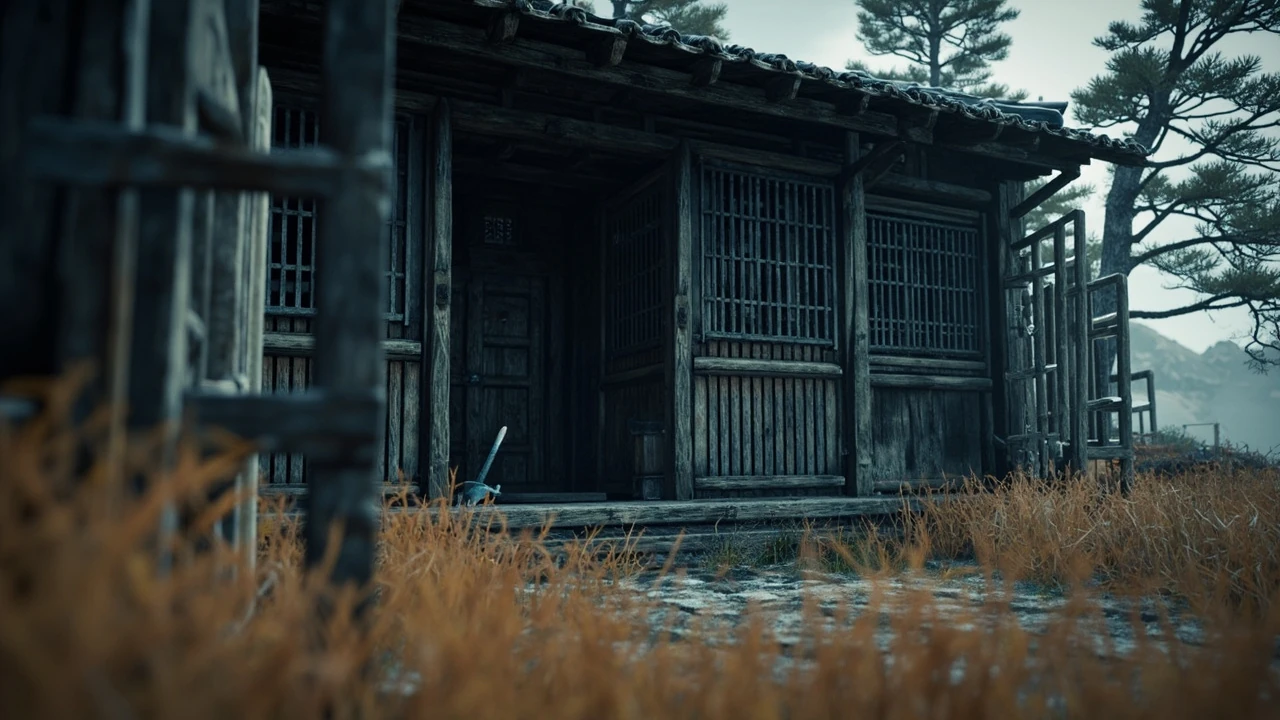
Closed off building Ghost of Yotei: what the term means in the open world
A closed off building in Ghost of Yotei is one of the recurring spatial puzzles that Sucker Punch Productions uses to pace exploration across Ezo. On the surface it looks like a simple locked door. In design terms it is a way to delay content, signal danger, and reward a return visit once the player has the right tool, key, or story beat. For players tracking every structure on the map, these buildings matter because they often hide loot, vendor inventories, or a narrative beat that ties into Atsu’s campaign. For developers studying Ghost of Yotei, the same mechanic is a compact example of how a modern open-world action game can keep a region feeling alive without leaving every door open from minute one.
Understanding what a closed off building actually represents starts with the broader shape of the open world. Ghost of Yotei continues the structure that Sucker Punch refined in Ghost of Tsushima, where the map is a handcrafted space rather than a procedurally assembled sandbox. Each region is a self-contained design surface, and within that surface every building is a small authored object. A locked door is not a system failure or a missing asset. It is a deliberate gate. The community has catalogued these gates and treats them as part of the route planning, and the official framing in promotional material describes the world as a layered space in which new abilities and story beats open previously unreachable pockets.
This article looks at the closed off building from both sides of the screen. It explains what a player sees when they meet one, how the design is meant to work, and what developers can take away from the way Ghost of Yotei handles locked interiors. It also flags the kind of variation that shows up across different building types, because not every closed door behaves the same way in this game.
How Ghost of Yotei defines a closed off building
A closed off building in Ghost of Yotei is any interior that the player can see and approach but cannot enter at the moment of first contact. The closure can be physical, narrative, or mechanical, and the game signals it through a combination of environmental staging, lighting, and prompt behavior.
Physical closure is the most common form. A door is boarded, barred, chained, or simply shut, and the standard interaction prompt is missing or replaced with a brief visual cue such as a sealed latch. The building is otherwise explorable, meaning the player can walk around its exterior, read any nearby signage, and in many cases look through windows or gaps to see the contents inside. This staging is deliberate. It tells the player that the space exists, that it is meant to be entered, and that a return trip will be required.
Narrative closure ties a building to a quest, a vendor, or a story chapter. The door is not locked in the mechanical sense, but the interior is gated because the content inside depends on a story beat that has not yet fired. Once the beat resolves, the same building opens without the player having to find a key. This pattern is common around camps, shrines, and residences that belong to named characters.
Mechanical closure depends on player capability. A building may require a specific tool, weapon, or stance to break in. Tool-gated interiors reward players who have invested in the broader progression system, while stance-gated interiors ask the player to demonstrate combat skill before the reward is granted. Both styles keep the open world from handing every reward to a single build or route order.
The end result is consistent: the player knows there is something inside, the game has explained why it is out of reach, and a clear next step exists. That structure is one of the reasons Ghost of Yotei’s map reads as authored rather than generated. The closed door is a small contract between the world and the player.
Why the open world uses closed off buildings as pacing
Closed off buildings are a pacing tool first and a puzzle second. A large open world can become overwhelming if every interior is open from the start, because the player has no reason to revisit an area or to invest in a progression track that only matters later. Locked interiors solve that problem by giving the map a memory. A player who clears a region early will recognize the same building later and feel rewarded for the return trip, because the door that was sealed is now a working door.
From a production standpoint, this pattern also lets the team stagger the content reveal across the campaign. Rather than front-loading every interior, art, narrative, and encounter designers can scatter closed doors through a region and then attach the unlock condition to whichever quest, vendor, or progression milestone makes narrative sense. This is consistent with the production approach described in interviews about the game, where producers talk about layering systems and pacing a single 1600s Ezo setting across dozens of interior spaces. The producer perspective on Ghost of Yotei at DigiPen’s program showcase, for instance, highlights how non-linear open worlds need a deliberate handoff between exploration and story.
For the player, this means a closed off building is rarely a dead end. It is a waypoint. It marks a place the world wants the player to come back to, and that future visit usually combines several systems at once: a new ability that clears the lock, a story beat that explains why the space matters, and a reward that scales with the player’s current power level. That three-part pattern is also why the open world in Ghost of Yotei feels denser than its raw square count would suggest.
Where players meet closed off buildings on the map
Closed off buildings show up in nearly every region of Ezo, but the density and the gate style vary by biome and settlement type. The table below summarizes the broad patterns a player is likely to encounter. It is based on the structure of the open world as described in official material and reflected in community maps, not on a specific count from any one patch.
| Region type | Typical closed off building | Common gate style | Likely unlock source |
|---|---|---|---|
| Coastal fishing village | Boathouse or net shed | Boarded door, sometimes chained | Side quest, vendor progression |
| Farmland homestead | Storehouse or root cellar | Tool-gated (crowbar or stance) | Combat or exploration ability |
| Mountain outpost | Watchtower, barracks, smithy | Narrative-gated | Story chapter or camp liberation |
| Shrine precinct | Inner hall or offering store | Ceremonial lock | Shrine completion, prayer bead track |
| Bandit camp | Leader’s hut, loot stash | Combat-gated | Clearing the camp and its leaders |
| Ruined estate | Main hall, hidden study | Mixed, often multiple gates | Side story with multiple beats |
Two things stand out in the table. First, the gate style is rarely arbitrary. A fishing village is more likely to use a boarded door, while a shrine uses a ceremonial lock. Second, the unlock source usually belongs to a system the player is already engaging with, so the building does not feel like a side trip onto a separate progression track. This is the kind of authored density that open-world teams aim for, and it is one of the reasons Ghost of Yotei reads as a designed place rather than a generated map.
What a player should do at a closed off building
The instinct to brute force a door is usually wrong in this game. A short routine will cover most cases without wasted time.
- Read the surrounding area for quest markers, signage, or NPC dialogue that points to the building.
- Check the map for nearby activities of a different type, such as a shrine, a camp, or a side quest giver.
- Inspect the exterior for a tool prompt, a stance prompt, or a narrative prompt that explains the gate.
- If the door is mechanically locked, mark the building on the map and return once the relevant ability is unlocked.
- If the door is narratively locked, advance the closest story beat and then revisit.
This routine is useful because it treats the closed off building as an information surface rather than a wall. Most of the time, the game has already given the player the cue needed to plan a return. The cases where the cue is missing are usually tied to late-game content or to vendor progression that has not started yet, and both are easier to manage with a map marker than with repeated trial.
How developers can use the same pattern
For a studio designing a similar open world, the closed off building is a compact design lesson. It combines several systems at once, and it is small enough to ship as a single authored object inside a much larger content pipeline. The mechanics below translate what Ghost of Yotei does into terms that a producer or level designer can put into a design document.
- Treat the closed door as a contract. The player needs to see the reward, understand the gate, and know the unlock source before they leave the area.
- Bind the gate to a system the player is already using, so the unlock feels like progression rather than a side errand.
- Stage the interior so that a glimpse through a window or gap communicates the value of the space.
- Use different gate styles in the same region to avoid visual repetition, and reuse styles across regions so the player can read the world.
- Track each closed off building in the world data so analytics can confirm that the unlock is reachable, the reward is meaningful, and the player does not get stuck.
Each of these points maps to a real production responsibility. The world data check, for example, belongs to the tools or content team. The visual staging belongs to art and lighting. The binding to existing progression belongs to systems design. The contract framing belongs to the design director, because it is what keeps a small authored object from drifting into feeling arbitrary.
What kind of reward sits behind a closed off building
Rewards vary by building, but they fall into a small set of categories. The table below lists the common reward types, the systems they feed, and the kind of player who tends to value them. It is a useful way to think about pacing because each reward type also changes how the player engages with the next closed off building they meet.
| Reward type | Typical content | System it feeds | Who values it most |
|---|---|---|---|
| Loot container | Weapons, armor, resources | Loadout and economy | Players optimizing builds |
| Vendor inventory | Special items, upgrades | Long-term progression | Players who revisit hubs |
| Narrative item | Letter, memento, codex entry | Story and lore | Players following character arcs |
| Fast travel anchor | Travel point, viewpoint | Map and traversal | Players covering large regions |
| Challenge arena | Combat or stealth trial | Skill and mastery | Players chasing personal scores |
| Hidden quest | Multi-step side story | Quest log and rewards | Players who explore every corner |
Mixing reward types across a region keeps the player curious. If every closed off building handed out a single material, the pattern would feel transactional. By binding different reward categories to different building types, the world signals that each door is part of a different system, and that signal is what gives a handcrafted open world its texture.
How closed off buildings fit into the broader map loop
The map loop in Ghost of Yotei is built around three repeating moves. The player explores a region, encounters content that is gated by a system they have not yet engaged, and returns later once the system is ready. Closed off buildings sit at the second step. They are the visible record of a region the player has already touched, and they give the return trip a purpose beyond simple completion.
This is also why the open world does not feel like a checklist. A checklist rewards order. A layered map rewards attention. When a player revisits a coastal village and finds that the boathouse is now open because a side quest has resolved, the world feels responsive even though the underlying system is the same one they have been using all game. That responsiveness is the design goal, and the closed off building is one of the cheapest ways to deliver it because each instance is small and authored.
For developers, the lesson is to think about the return trip as a feature, not a side effect. A return trip is a chance to show the player that the world remembers them, that progression has value, and that the space is richer than it first looked. Closed off buildings make that argument in physical form, and that is why the pattern is so common in this kind of open-world action game.
Common misconceptions about closed off buildings
For additional context, Players new to the game sometimes read a closed off building as a bug or a missing piece of content. The list below covers the misconceptions that come up most often, and the answer in each case is the same: the door is doing its job, and the next step is on the player’s side of the contract.
- Believing the building is broken because the prompt is missing. In most cases the prompt is suppressed because the unlock condition has not been met.
- Assuming every closed door hides a unique reward. Some buildings contain flavor content, and the value is the discovery rather than a rare drop.
- Trying to climb through a window to bypass the gate. The game usually stages the interior so that the intended route is the only one that triggers the reward.
- Ignoring map markers because the building seems minor. Map markers are the player’s best tool for tracking return trips in a dense region.
- Reading a closed off building as a sign that the region is incomplete. The closure is a designed state, and the region is meant to be explored in stages.
Each of these is a small reminder that the open world is built around layers rather than volumes. A player who treats the layers as a feature will find the game richer, and a developer who designs with that same framing will get more out of a smaller content budget.
How the production pipeline supports a dense open world
Ghost of Yotei is the product of a team that has shipped open-world action games before, and that history shows up in the production pipeline. Each region is built from a kit of interior and exterior modules, and each module can be tagged with one or more gate styles. The data layer tracks the gate style, the unlock source, and the reward category so that producers can balance a region without re-authoring the content by hand. A reference for the kind of work this involves, including non-linear scheduling across a single open world, is described in the DigiPen showcase piece on producing the game, which is worth reading for anyone who wants to see how the producer role ties authored objects to a multi-year schedule.
The wiki entry for Ghost of Yotei collects the same kind of high-level information, including the setting, the development studio, and the broad shape of the open world, and it is a useful starting point for a developer who wants to confirm a detail before building a design document around the game.
For a small studio, the take-away is that the closed off building is a system you can ship without a huge engine investment. A spreadsheet, a tag, and a small set of interior kits will get you a long way, and the player experience will benefit even if the world is far smaller than Ezo. The design lesson is the same one Ghost of Yotei applies at scale: the closed door is a way to make a handcrafted space feel larger than it is.
Edge cases and variations worth knowing
Not every closed off building follows the same pattern. The list below collects a few of the variations that show up across the open world, and the production logic behind each one.
- Buildings that are closed at the start of a region and open as soon as the player liberates a nearby camp. The unlock source is combat, not progression.
- Buildings that are closed because the player lacks a specific stance, and which open as soon as the stance is purchased. The unlock source is mechanical.
- Buildings that stay closed until a late-game vendor arrives, which makes them part of the live economy rather than the main story.
- Buildings that close again after a story beat, usually to reflect a change in the region. The closure is now narrative.
- Buildings that act as false locks, where the door is staged as closed but the interior is reached through a window or a side entrance. The pattern rewards attentive players.
These variations are the reason a single label like “closed off building” can feel broad. The label describes a state, not a system. Knowing the system behind a given door is what turns a frustrating wall into a planned return trip, and that planning is where the open-world design pays off.
How a developer can audit a closed off building
If a studio wants to make sure the pattern is working, a short audit covers most failure modes. The list below is a starting point for a producer or QA lead who wants to evaluate one interior, one region, or a whole map.
- Confirm the door is visible, the interior is hinted at, and the gate style is readable from outside.
- Confirm the unlock source is reachable on a normal route through the game, not on a hidden or out-of-order path.
- Confirm the reward is meaningful at the moment the door opens, not a leftover from an earlier balance pass.
- Confirm analytics can track the door so the team can see whether players are returning, bypassing, or abandoning the building.
- Confirm the door is removed from the world data once it opens, so the open state does not drift back to closed after a patch.
Each of these checks is small, but together they prevent the most common complaints about locked interiors in open-world games. A door that is readable, reachable, and rewarding will not generate support tickets, and a door that fails any of those tests will.
What this means for a player planning a route
For a player who is mapping a route through Ghost of Yotei, the closed off building is a tool. A few practical rules of thumb will keep the route clean without turning the open world into a checklist.
- Mark every closed off building the first time you meet it, even if the unlock source is obvious.
- Group buildings by gate style so that a single return trip can clear several doors in one region.
- Save the most remote closed off buildings for a late-game sweep, when most unlocks are in place.
- Do not force a route around a closed door. The world is built so that a return trip is part of the plan.
- Treat vendor-gated and shrine-gated buildings as a separate track from combat-gated buildings, because their unlocks follow different timelines.
These rules are not specific to Ghost of Yotei, but they fit the way the game is built. A route that respects the layered map will feel faster, because the player spends less time guessing and more time moving through a world that is ready for them.
What this means for a developer planning an open world
For a developer, the closed off building is one of the most cost-effective design moves available in an open world. It does not require new engine features, it does not require a large content budget, and it scales with the size of the map. The key is to treat each instance as a small authored object with a clear contract, a clear gate, and a clear reward. The system behind the door matters less than the discipline with which the door is used.
That discipline is what Ghost of Yotei applies across Ezo, and it is one of the reasons the open world holds together even when the player is not following a single quest. The closed off building is a small thing, but small things are how a handcrafted world earns its texture.
Frequently asked questions
What is a closed off building in Ghost of Yotei?
A closed off building is an interior space that the player can see and approach but cannot enter on the first visit. The closure can be physical, narrative, or mechanical, and the game signals it through the door state, the surrounding staging, and the absence of an interaction prompt. The building is meant to be revisited once the relevant unlock condition has been met.
Are closed off buildings always locked in the same way?
No. The gate style depends on the building type and the region. Fishing villages often use boarded doors, shrines use ceremonial locks, bandit camps are combat-gated, and ruined estates may combine several gate styles in the same complex. The variation is part of how the world reads as authored.
How do I open a closed off building?
Look for the nearest story beat, side quest, vendor, shrine, or progression milestone that matches the gate style. The game usually signals the unlock source through environmental cues, quest markers, or nearby NPCs. If the cue is unclear, mark the building and return later once the relevant system is ready.
Do closed off buildings always contain rare loot?
Not always. Some contain unique weapons, armor, or vendor inventory. Others contain narrative items, fast travel anchors, or hidden quests. A few contain flavor content where the value is the discovery itself. The reward type usually matches the gate style, so a combat-gated building is more likely to hold a combat-oriented reward.
Can I bypass a closed off building?
Sometimes, but the game usually stages the interior so the intended route is the only one that triggers the reward. Climbing through a window may let you see the space, but the unique contents are often tied to the door’s proper unlock. Planning a return trip is usually faster than trying to break the contract.
Why does the open world have so many closed off buildings?
Closed off buildings are a pacing tool. They give the map a memory, they stagger the content reveal across the campaign, and they reward the player for engaging with the progression systems. The pattern is one of the cheapest ways to make a handcrafted world feel larger than it is.
Do closed off buildings change after the main story ends?
Some do, especially those tied to late-game vendors or story beats. The game is designed so that a return trip after the main story often opens buildings that were closed during the campaign, which is another reason the open world rewards a slow approach.
Is a closed off building the same as a locked chest or a sealed cave?
The pattern is similar, but the scale is different. A closed off building is a full interior with a designed entry point, while a locked chest is a container and a sealed cave is a region. The shared design idea is the same: the player sees the content, understands the gate, and returns when the unlock source is ready.
What should I do if a closed off building never opens?
Double-check the nearest quest, vendor, and shrine status, and confirm that the relevant progression milestone has fired. If the building still does not open after a story beat that touches the same region, it is worth checking the patch notes, because a late patch can change the unlock conditions for some interiors.
Are closed off buildings useful for developers studying Ghost of Yotei?
Yes. The pattern is a compact example of how a modern open-world action game can layer content without a large engine investment. Studying the gate styles, the unlock sources, and the reward types is a useful way to learn how Sucker Punch Productions paces a handcrafted map, and it is a pattern that translates well to smaller projects.
