
Arc Raiders update: what Frozen Trail actually delivers
The latest Arc Raiders update, called Frozen Trail, dropped as a meaningful content patch rather than a balance pass. It brings a new map called Pendola Pass, several new ARC machine types, a rework of the Raider Skill Tree, a new player housing system called the Outpost, and a progression mechanic called the Reward Pass that replaces the older Raider Decks. The patch also layers in traversal tools, a functional camera gadget, weapon customization upgrades, and two new musical instruments. For developers, designers, and players who track extraction shooters as systems rather than just patch lists, the patch is interesting because it touches quest design, enemy AI archetypes, player progression, and live-service monetization in the same release.
This page walks through the change set the way a developer-oriented tracker would: what the patch adds, what it removes or replaces, where the verified sources confirm a detail, and what remains an open question because no public material spells it out. If you are working on a similar extraction or live-service title, the relevant questions are not just “what is new” but “how do the new systems change player decision-making, and which existing systems are being deprecated or moved.”
What the Frozen Trail patch actually adds to Arc Raiders
Frozen Trail is the headline Arc Raiders update of the current cycle, and the verified patch summary describes several categories of addition rather than a single feature. The most visible additions are the new map, the new enemy types, the new weapons and items, and the Outpost housing system. Behind those, the patch reworks the skill tree, introduces the Reward Pass, and adds traversal and utility tools that change how players move through a map.
Treat the patch as a stacked release. New content always lands on top of existing systems, and the developer intent in a patch like this is to give experienced players a reason to re-learn routes while giving newer players a wider set of verbs to experiment with during combat and traversal.
Pendola Pass: the new extraction map
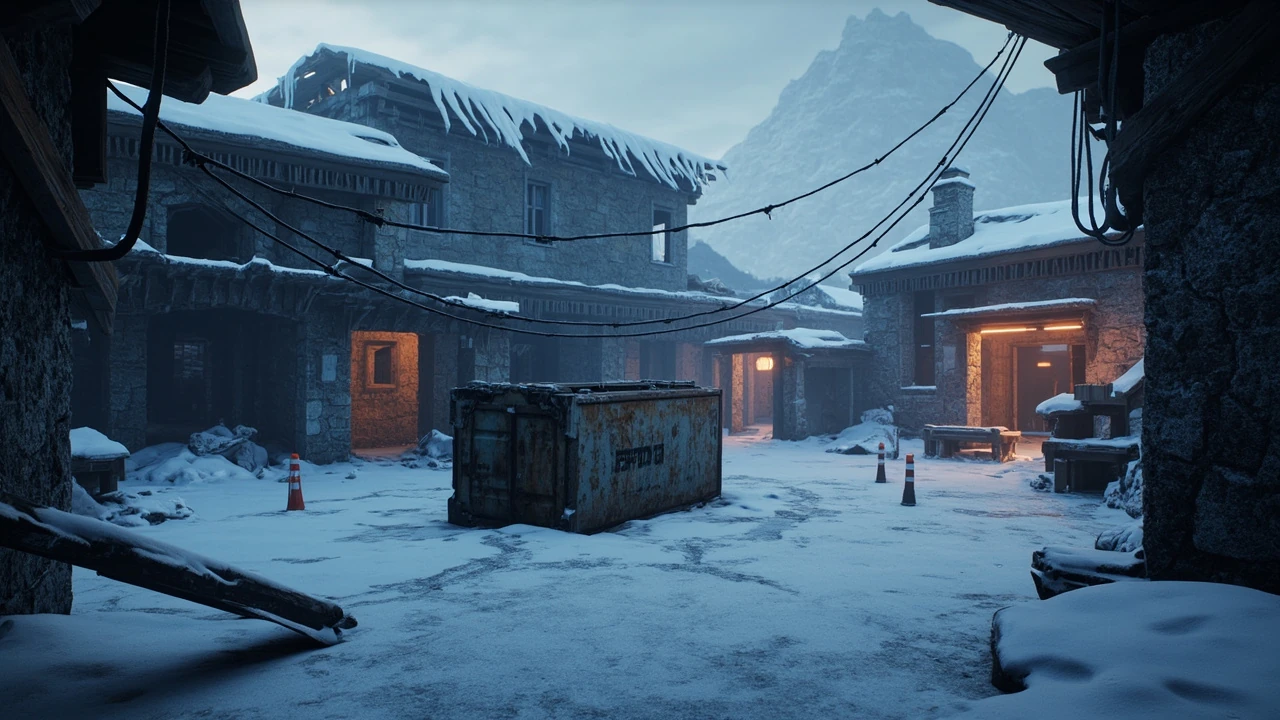
Pendola Pass is a snowy Italian village built around an Exodus transport hub. The setting, according to the verified patch summary, is the site of a fallen Emperor machine, and the surrounding area is framed as a place where very rare technology is reachable if players can figure out how to get inside.
For level designers, the interesting part of Pendola Pass is the stated payoff structure. The reward is gated behind both navigation and combat, and the narrative framing (“one of the Emperors has fallen”) is tied to an in-fiction machine class rather than a hand-placed loot crate. That kind of environmental storytelling is what designers often point to when they talk about systemic worldbuilding instead of scripted cinematics.
For players, the relevant question is what the new map changes about route planning. New maps in extraction shooters usually mean new extraction points, new high-value loot zones, and new chokepoints where other players will camp. Until the community maps those out, treat any specific loot location claims as unverified.
How Pendola Pass fits the existing map roster
If you already play Arc Raiders, the new map joins a roster of varied biomes, and the snowy village setting is the first cold-climate map in the rotation. A cold-climate setting affects more than atmosphere: it changes visibility range, audio propagation, and the value of stamina or warmth mechanics, depending on what the developers ultimately choose to expose. The verified patch text does not go into those mechanical details, so the safe reading is that Frozen Trail ships a new map and a new visual context, and any deeper system changes tied to cold exposure remain unconfirmed.
New ARC enemies: Frigate, Bully, Skulker, and Hydra
The Frozen Trail update introduces multiple new ARC machines, and each one targets a different player behavior.
Frigate: a large multi-room ARC vessel
The Frigate is described as one of ARC’s largest vessels and a substantial challenge. After reaching it, players need to navigate internal passageways, unlock paths, and defend against various ARC types. Mechanically, the Frigate functions as a dungeon inside a machine, which is closer to a Destiny strike or a Monster Hunter hunt than to a standard open-field encounter.
For AI and encounter designers, the implication is that the Frigate uses a small set of interior arenas with locked doors and scripted progression beats, which is how most multi-room boss encounters in the genre are structured.
Bully: an aggressive close-range beast
The Bully is described as an oppressive, aggressive beast that quickly gallops toward the player and fights with a lethal moveset. In combat terms, the Bully is a pressure enemy: it exists to close distance and deny space, which means the counterplay is kiting, hard crowd control, or burst damage at the moment of engagement.
Skulker: an ambush predator
The Skulker is described as a sneaky enemy that lies in wait and stays out of sight to ambush the player. Skulkers are the kind of enemy that breaks the typical “see enemy, shoot enemy” loop. Their presence usually implies that stealth detection, audio cues, and radar pings are now higher-value tools, and players who ignore those systems will be punished disproportionately.
Hydra: a stacked autonomous turret
The Hydra is split into three stacked, autonomous portions and is a turret that can handle entire squads with a triple-threat of weapons. The Hydra is found aboard the Frigate. Mechanically, this is a multi-part enemy where destroying one segment may not stop the other two, and the engagement rewards focus fire, target prioritization, and possibly grenades or area damage.
| Enemy | Archetype | Engagement style | Design intent |
|---|---|---|---|
| Frigate | Multi-room vessel | Navigate interior, unlock paths, defend | Boss-style dungeon inside a machine |
| Bully | Aggressive beast | Close-range rush, lethal attacks | Deny space, pressure positioning |
| Skulker | Ambush predator | Stealth approach, burst damage on contact | Reward detection tools and audio awareness |
| Hydra | Stacked autonomous turret | Triple-threat fire, squad-level threat | Test focus fire and target priority |
Raider Skill Tree rework: new nodes, new structure
The Frozen Trail update reworks the Raider Skill Tree. The verified description is specific: the previous “large” nodes at the middle and end of branches are being replaced with new functionality. The old structure, which had two branches with a selectable skill each, is replaced with one path offering a choice between two skills, with only one selectable per choice. The choice can be remade whenever the skill tree is reset.
At the end of each branch, players now face two nodes with three skills each, and the verified text says players can choose up to two of the three after reaching the required skill point investment. That structure shifts the tree from a “one major pick per branch” model to a “two minor picks plus one cap pick” model.
What the rework means for build planning
For players, the rework means that respecs matter more, because every reset lets players revisit the small two-way choices. For developers tracking the patch, the relevant question is whether the new structure creates dominant skill combinations that will get nerfed in a follow-up patch. Branched skill trees always risk that, and the patch text does not list specific balance targets.
The Outpost: player housing with research-driven progression
The Outpost is the new home system. Players can customize it with different modules and decorate the interior with furniture. Furniture Designs are similar to Blueprints and can be learned to craft furniture for the Outpost.
The more interesting part is the Research Workstation. The Outpost houses a Research Workstation that lets players access higher levels of weapon customization and modding, with the stated intent to add to the feature over time for further customization.
To unlock the Outpost, players need to complete a project, and the patch text reminds players to accept the quest and bring a camera, which suggests the unlock quest involves in-game photography.
Why the Outpost is a systems change, not a vanity feature
Player housing is usually treated as a cosmetic layer, but in this case the housing is the gate to the highest tier of weapon customization. That ties housing to combat progression, which is closer to a Destiny vault or a Monster Hunter room than to a pure decoration system. For live-service designers, the pattern is consistent: cosmetic surface, mechanical core, and a slow drip of new modules that keeps players logging in.
Weapon customization: a fifth quality level
The patch introduces a fifth quality level for a range of guns, accessed through the fully upgraded Research Workstation in the Outpost. The fifth level unlocks a branching path of abilities and enhancements that can change a weapon’s behavior. At launch, the system is available for 15 weapons, with more planned.
For balance, the relevant questions are how broad the branching path is, whether any of the new enhancements are strictly dominant, and how the upgrade cost scales. The patch text does not list specific enhancements, so treat the feature as “the system exists, and the details are intentionally not in the patch summary” until developer notes or community testing confirm otherwise.
Traversal tools: Grapple Hook, Tether Launcher, Yank Grenade
Frozen Trail adds three traversal or utility tools that change how players move through maps and interact with ARC.
- Grapple Hook: climb hard-to-reach spots, abseil off buildings, and swing over large gaps. The hook gives players a new vertical axis, which usually means map designers also need to place useful items or sightlines on rooftops and ledges.
- Tether Launcher: connects two points with a wire, allowing players to root ARC in place or attach Raiders to ARC. This is a combat-control tool, not just a traversal tool, and it changes the way squads can lock down a machine.
- Yank Grenade: uses the same tether principle, but on detonation it pulls a nearby target with violent force. This is a soft crowd-control grenade that pulls instead of pushing, which is a useful option against fast, aggressive enemies like the Bully.
The combined effect is a deeper traversal and control layer. A grapple changes routing, a tether changes squad play, and a yank grenade changes how players handle priority targets. The patch is adding verbs, not just nouns.
Camera gadget: photography as a feature
Frozen Trail adds a fully functional camera gadget with zoom, aperture, manual and automatic focus racking, and a selfie mode with custom emotes. Photos are saved to the Codex.
The camera is more than a vanity tool because the Outpost unlock quest specifically asks players to bring a camera, which means the camera is also a progression requirement. For developers, that is a clean way to add an optional feature and still give it a mechanical role.
Reward Pass: the new progression mechanic
Frozen Trail replaces Raider Decks with a new mechanic called the Reward Pass. The patch text introduces Feats split into three categories, Easy, Medium, and Hard, and the new system changes how weekly milestones work: weekly milestones grant 250 Reward Points each, with three available per week.
The verified patch summary does not list the full milestone table or the full pass reward structure. The Collector Set DLC is available on both free and premium Reward Pass tracks, including a new cosmetic set, the Renzo, Dragon’s Breath Weapon Stencil, Bob Hair Style, and 2,400 Raider Tokens.
| Progression element | What changes | Why it matters |
|---|---|---|
| Raider Decks | Replaced by Reward Pass | Old deck system is deprecated |
| Feats | Split into Easy, Medium, Hard | New difficulty tiers in the daily or weekly objective pool |
| Weekly milestones | Three per week, 250 Reward Points each | Sets a weekly ceiling at 750 points from milestones |
| Collector Set DLC | Free and premium tracks include Renzo cosmetic set, Dragon’s Breath stencil, Bob hair, 2,400 Raider Tokens | Confirms cosmetic and currency rewards in the new pass |
For live-service designers, the Reward Pass structure is a familiar battle pass pattern. The interesting question is whether the Easy, Medium, and Hard split will produce a healthy mix of engagement types or whether the Hard tier ends up being the only one that gates meaningful rewards.
New instruments: Harmonica and Banjo
The patch adds two new instruments in October: a Harmonica and a Banjo. The Banjo blueprint is offered in the Collector Set DLC. Weapon Stencils are also being added, which let players re-skin their weapons.
In a game where players spend a lot of downtime waiting for friends or matchmaking, instruments are a small but real engagement loop. Combined with the camera, the patch is clearly pushing toward more in-game social tools.
What Frozen Trail does not change
It is also useful to track what the patch does not say. The verified patch summary does not list new monetization, does not announce a new ranked or competitive mode, does not list balance changes to existing weapons, and does not describe specific anti-cheat work. That does not mean those areas are unchanged, only that the verified source does not speak to them.
If a player or developer cares about a specific system, the safe approach is to read the full patch notes, not just the patch summary, before drawing conclusions about buffs, nerfs, or new systems that are not mentioned in the press text.
How to track future Arc Raiders updates as a developer
For developers and designers who treat Arc Raiders as a reference point for extraction and live-service design, a patch like Frozen Trail is worth tracking in a structured way. The categories that tend to outlive any single patch are map design, enemy archetypes, progression, monetization, and tooling. A simple tracking template looks like this.
- Map design: biome, intended player density, loot gating, extraction flow, and whether the map introduces a new traversal verb.
- Enemy archetypes: combat role, counterplay, AI behavior, and where the enemy is found (open world, instanced, or boss arena).
- Progression: skill tree changes, unlock paths, currency sinks, and weekly or seasonal caps.
- Monetization: pass structure, premium tracks, paid DLC overlap with free rewards, and any new store SKUs.
- Tooling: gadgets that double as progression gates, like the camera, and how those tools are taught through quests.
The reason this matters is that a single patch is rarely a full picture. The pattern across a season is what tells you whether a studio is iterating on systems or replacing them. Frozen Trail does both: it iterates on the skill tree and traversal, and it replaces the old deck system with a pass.
Verified source for this page
The factual claims here are drawn from a single primary source, the ARC Raiders Frozen Trail Details and Patch Notes, which provides useful background for this point. summary. Where the patch summary did not include a number, a date, or a system detail, this page has not filled the gap. The full official Frozen Trail 2.0 Patch Notes are referenced inside that source and are the next place to look if a specific number or system behavior is required for design or QA work.
For players, the practical sequence is straightforward: read the official patch notes, then test the new content in low-stakes runs before committing skill resets or currency. For developers, the useful habit is to read the patch summary as a press layer and the patch notes as a systems layer, because press summaries smooth over the parts of a patch that actually break or fix the meta.
Frequently asked questions
What is the new Arc Raiders update called?
The latest Arc Raiders update is called Frozen Trail, and it includes a new map called Pendola Pass, new enemy types, new weapons, a reworked skill tree, and a new player housing system called the Outpost.
What is the new map in the Arc Raiders Frozen Trail update?
The new map is Pendola Pass, a snowy Italian village built around an Exodus transport hub. The area is tied to a fallen Emperor machine, and the rare technology inside is the main draw for players willing to push into the new zone.
Which new enemies are added in the Arc Raiders update?
The update adds the Frigate, a large multi-room ARC vessel; the Bully, an aggressive close-range beast; the Skulker, a stealth ambush enemy; and the Hydra, a stacked autonomous turret found aboard the Frigate.
How does the Raider Skill Tree change in this update?
The skill tree is restructured so that the previous “large” nodes at the middle and end of each branch are replaced with new functionality. Each branch now offers a single path with a choice between two skills, and at the end of each branch players choose up to two of three skills after meeting the required skill point investment. Choices can be remade on a skill tree reset.
What is the Outpost in the Arc Raiders update?
The Outpost is a new customizable home base. Players can add modules and decorate the interior with craftable furniture. The Outpost also houses the Research Workstation, which unlocks higher levels of weapon customization and modding, including a fifth quality level for 15 weapons at launch.
How do you unlock the Outpost in Arc Raiders?
The Outpost is unlocked by completing a specific project quest. The patch text reminds players to accept the quest and bring a camera, which means in-game photography is part of the unlock flow.
What does the fifth weapon quality level do in Frozen Trail?
The fifth quality level opens a branching path of abilities and enhancements that can change a weapon’s behavior. It is accessed through the Research Workstation in the Outpost, and at launch the system covers 15 weapons, with more planned in future updates.
What are the Grapple Hook, Tether Launcher, and Yank Grenade used for?
The Grapple Hook is for climbing, abseiling, and swinging. The Tether Launcher connects two points with a wire, allowing players to root ARC in place or attach Raiders to ARC. The Yank Grenade uses the same wire mechanic to pull a target toward the detonation point. Together, they add both a vertical traversal axis and a new form of crowd control.
What is the Reward Pass in the Arc Raiders update?
The Reward Pass replaces the older Raider Decks. It introduces Feats split into Easy, Medium, and Hard categories, and weekly milestones now grant 250 Reward Points each, with three milestones available per week. The Collector Set DLC is available on both free and premium tracks.
Does the Arc Raiders update change monetization or add a new battle pass cost?
The verified patch summary does not list a new price for the Reward Pass or any change to store pricing. It confirms that the Collector Set DLC is offered on both free and premium tracks and lists the included items. For a current price or store layout, the official ARC Raiders website and store pages are the reliable source.
