
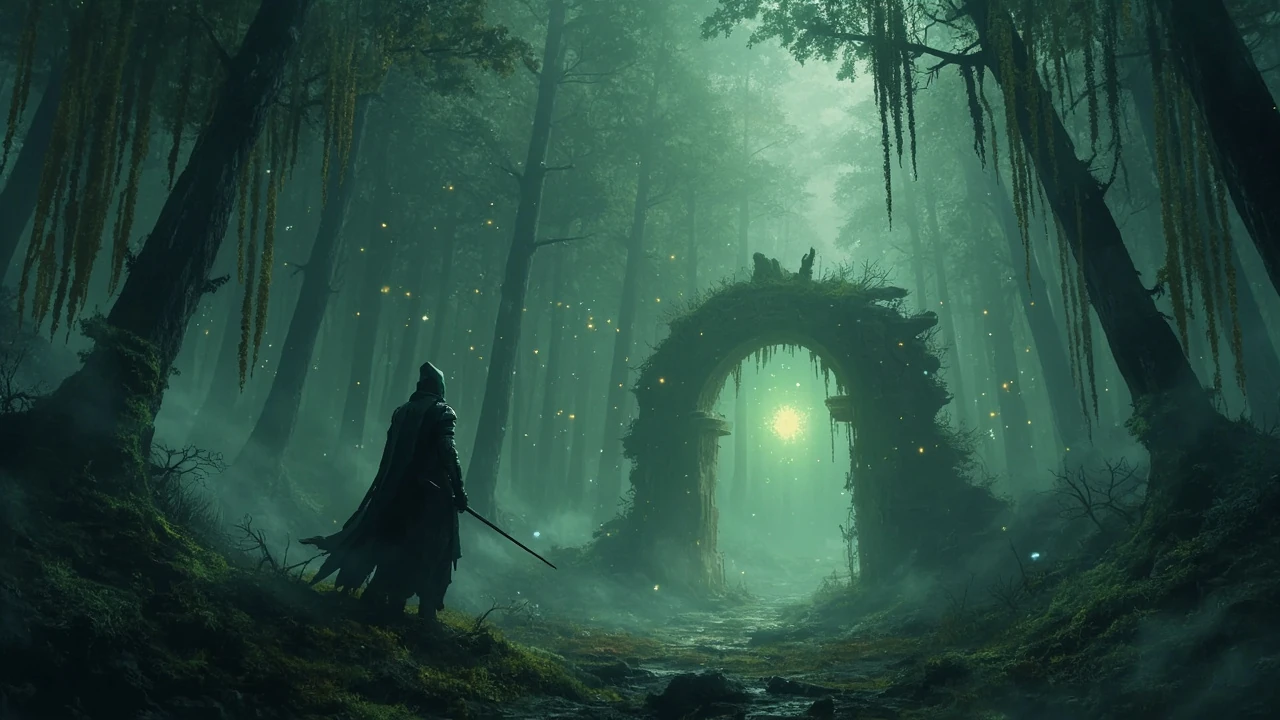
Heart of the woods silksong: separating a fan theory from confirmed development
A persistent line of speculation in the Hollow Knight community links a location from a 2018 indie side project, Heart of the Woods, to the eventual release of Hollow Knight: Silksong. The idea surfaces on forums, in Reddit threads, and across short-form video essays whenever news around Team Cherry dries up, which it often does. The claim is concrete enough to repeat and loose enough to bend in several directions at once. The challenge for a reader is that the original connection was made by fans, not by Team Cherry, and the development team’s public statements have never confirmed the crossover reading. This page works through what the theory actually asserts, where it came from, why it still circulates, and what Silksong‘s confirmed material does and does not support.
For a game development audience, the discussion is more useful than it first looks. The heart of the woods silksong theory is a small, well-documented case study in how a community interprets a studio’s public signals, how indie development timelines shape expectation, and how side projects by other creators get woven into the mythology of an unrelated release. Reading it carefully is a way to practice media literacy, but it is also a way to think about the production communication choices that feed a long-running indie sequel.
Where the heart of the woods silksong theory actually originated
The phrase “heart of the woods” has been a common fantasy location name for years, so the theory’s foundation matters as much as the phrase itself. Two distinct references get folded into the same idea.
The first is the 2018 visual novel Heart of the Woods, developed by Sekai Project and originally released on itch.io before its console ports. The game is a yuri visual novel set in a rural town called Easan, where a folklore researcher and a centuries-old forest spirit named Morgana become the focus of a supernatural mystery. The relevant detail for the theory is its imagery: a dense northern European forest, mossy ruins, pale-green magical energy, and a recurring motif of a heart-shaped wooden seal that binds the forest spirit. None of that is directly connected to Hollow Knight: Silksong; the connection exists only in shared visual vocabulary.
The second is a much older fantasy trope. “Heart of the woods” appears as a phrase in tabletop role-playing games, European folklore, and various fantasy novels. It typically denotes a sacred centre, a binding seal, or the place where a forest’s power concentrates. The Hollow Knight community’s interest in the phrase sharpened when Silksong was first announced and when Team Cherry released Silksong‘s early trailers, which prominently feature a new kingdom called Pharloom, ruled by a citadel, and built around silk, song, and choral magic. Once a forest kingdom with a literal binding was on the table, “heart of the woods” became a placeholder for whatever sealed or sacred forest the sequel might eventually include.
For an editor reading the theory back, the most important fact is that there is no published link between Sekai Project and Team Cherry, no co-marketing, no statement from either studio, and no asset overlap that would justify a direct reading. The For additional context, Heart of the Woods page records the visual novel as a separate project with its own design team, story, and release history. Treating the two works as a connected franchise is a community habit, not a documented collaboration.
What Team Cherry has actually shown about Silksong
Before evaluating the theory, the confirmed material has to be put on the table. Team Cherry is the Australian indie studio of Ari Gibson, William Pellen, and later composer Christopher Larkin, the developers of Hollow Knight and the announced Hollow Knight: Silksong. The studio is small, communicates infrequently, and prefers shipping progress over talking about it, which is part of why speculative content fills the gaps.
Their Silksong communications, drawn from the official Team Cherry site, the Xbox and Nintendo Direct presentations, and the studio’s occasional social posts, describe a focused set of additions:
- Hornet as the playable protagonist, with her own moveset, silk-based abilities, a needle weapon, and a separate progression system from the Knight.
- A new kingdom, Pharloom, ruled by a haunted citadel and tied to themes of silk, song, and pilgrimage.
- Expanded quest tracking, a quest board, and a denser NPC economy than the original game offered.
- New enemy classes, a revised boss design approach with longer multi-stage encounters, and a craftable tool system that uses gathered resources.
- Tool categories for melee, ranged, and support, with a planned crafting tier that was previewed in early demos.
None of those bullet points, in any official trailer, blog post, or interview, reference a forest kingdom with a binding seal, a green-glowing heart motif, or a crossover with the visual novel Heart of the Woods. The closest visual overlap is the mossy, overgrown architectural style that both products share, which is a common fantasy art direction rather than evidence of a shared world.
The community’s reading of the theory has therefore had to lean on indirect signals. Some of those signals are worth taking seriously, others less so.
Arguments the heart of the woods silksong theory actually makes
When the theory is laid out cleanly, four arguments tend to recur. Each one is a real piece of community reasoning, and each has a different weight.
Visual and thematic proximity
Both works feature a dense forest setting with overgrown ruins, a binding motif that ties a magical place to a physical seal, and a central character with a pale-green magical element. From a purely visual standpoint, the two products look like they could share a colour grader. The theory treats that as suggestive rather than decisive, since visual style is not intellectual property.
Timing and indie collaboration norms
Some proponents argue that the two studios could have shared assets, contracts, or licensing given how small the indie landscape is. There are real examples of indie studios swapping music, voice actors, or promotional art. The argument is structurally plausible, but without a confirmed credit, statement, or contract, it remains a structural argument, not evidence.
Community pattern recognition
For additional context, Game communities often treat unrelated references as a single canon. Dark Souls and Bloodborne get connected through shared themes. Hollow Knight and Silt get compared for their hand-drawn aquatic style. The theory treats the visual novel’s Heart of the Woods as a metatextual reference to Silksong rather than a coincidence. That is a fair reading, but it is also exactly the kind of reading that requires confirmation from the creators before it can be promoted as fact.
Absence of contradiction
Some versions of the theory argue from silence. Because Team Cherry has not formally denied the connection, the absence of a denial is treated as soft confirmation. That is a weak form of argument, since indie studios rarely address fan theories that are not actively harmful or commercially confusing. Absence of a denial is not the same as confirmation, and a careful editor should weight it accordingly.
What the theory does not yet have
A theory becomes stronger when it is supported by primary evidence. The list of what is missing is worth keeping in mind, because it is the actual reason a reader should hold the claim at arm’s length.
- No official statement from Team Cherry, Sekai Project, or any involved publisher that connects the two works.
- No shared art credits, shared voice actors, shared composer, or shared contractor visible in either project’s credits.
- No marketing, store listing, age rating filing, or platform holder announcement that bundles the two releases.
- No datamined asset, debug log, or file reference from any Silksong build that links the visual novel’s lore.
- No interview quote from either studio that confirms the reading.
Those are the conditions under which the theory would shift from a community pattern into a documented crossover. Until they are met, the most precise description of the claim is that two unrelated indie projects share visual and thematic vocabulary, and a community has built a bridge between them.
Why the theory keeps returning to Hollow Knight discussions
The persistence of the idea is not random. Three conditions in the Silksong release cycle make it almost inevitable that a theory like this one will be revisited regularly.
Long development timelines and small studios
Team Cherry has been quiet for long stretches, partly because Hollow Knight and its free content updates ran from 2017 into 2019, partly because the studio’s first major follow-up is Silksong, and partly because they have said plainly that they do not want to ship a half-finished product. For a community that wants news, that silence creates a vacuum. Theories are the natural fill.
The original game’s reading culture
Hollow Knight is a game that rewards close reading. Hidden lore, ambient storytelling, and subtle environmental cues created a culture of analysis that Silksong is now absorbing. That culture treats every visual cue, every frame of a trailer, and every reused asset as evidence, which is a useful habit for design analysis and a risky one for canonical fact.
The availability of comparison material
Because Heart of the Woods exists as a finished, thematically similar visual novel, the comparison material is always one search away. The theory has a stable reference object, which gives it staying power even when no new evidence is added.
A useful comparison: how indie studios usually confirm or deny crossovers
The cleanest way to decide how seriously to take a crossover theory is to compare it with how indie studios have handled real crossovers in the past. The table below compares three real crossover cases with the heart of the woods silksong claim, on the dimensions that usually make the difference between a documented collaboration and a community reading.
| Comparison dimension | Documented indie crossover (e.g. Shovel Knight guests in other indie games) | Marketing or media crossover (e.g. Dead Cells casts from other indie IPs) | Community reading without confirmation (the heart of the woods silksong claim) |
|---|---|---|---|
| Official statement from either studio | Yes, with credits on both sides | Yes, in a press release or trailer | None on record |
| Shared assets, code, or contracts | Often, including shared animation or guest characters | Limited to promotional art or themed cosmetics | No evidence |
| Marketing or storefront credit | Listed on store pages and in-game credits | Featured in launch trailers | Not present on either product page |
| Interviews or developer posts | Covered in at least one studio interview | Often the subject of the launch marketing | No interview addresses the connection |
| Longevity of the claim | Short, because the link is clear from the start | Short, since the launch itself settles the question | Long, because there is no closure either way |
The shape of the comparison is the useful part. A documented crossover is short-lived because the documentation settles it. A community reading without confirmation is long-lived because every new frame of a trailer, every new piece of promotional art, and every quiet news cycle gives the community a new opportunity to revisit it. The heart of the woods silksong claim behaves like the third column, which is a description, not a verdict.
What a careful reader should take from the theory
A reader does not need to take a side. The most useful position is the one a careful editor or producer would take when a community makes a claim that has not been confirmed. Three checks are worth running.
- Is there a primary source, or only interpretation? For the heart of the woods silksong claim, the sources are forum posts, video essays, and fan wikis. None of those are primary sources.
- Is the claim consistent with what the studios have said and shipped? It is consistent in tone, but it is not described in any shipping material from either product.
- What would the studios have to do, or have done, to make the claim true? At minimum, a credit, a statement, or a shared asset. None of those are present.
Run those three checks and the claim drops into the category of a community theory, not a documented crossover. That distinction is what keeps the article honest for the GameDev reader, who is more likely to be a producer, designer, or technical artist than a casual fan.
How the theory interacts with Hollow Knight’s design language
One reason the visual novel comparison lands for some players is that Hollow Knight uses a small, consistent visual grammar. A For additional context, recurring pale-green glow, a recurring seal-like iconography, and a recurring “binding” theme run through the original game. Silksong‘s confirmed material extends that grammar into silk, song, and pilgrimage, but the underlying architectural style is similar. From a design perspective, that is a deliberate choice. From a community perspective, it is an invitation to read every green glow as a binding and every forest as a sacred heart.
A few recurring design elements make the bridge easy to build:
- A pale-green colour used for magical binding and healing, applied consistently in Hollow Knight.
- Architecture overgrown by moss and roots, which signals a kingdom abandoned or sealed.
- A circular or heart-shaped iconography that recurs in seals, sigils, and loading art.
- Forest biomes treated as both a setting and a moral state, with the forest itself as a character.
None of those elements are unique to either product. They are part of a shared fantasy vocabulary, and the fact that both projects draw on it well is the only objective overlap. The rest of the connection is reading.
What a producer or community manager can learn from the theory’s structure
The theory is also useful as a small case study in community communication. A studio does not have to engage with every claim, but the way a claim is built tells a producer what a community is actually looking for. In this case, the community is looking for confirmation that the long wait for Silksong is being spent on meaningful worldbuilding. The heart of the woods reading is a way of saying “we hope the forest you are building is more than a backdrop.”
Three production takeaways follow.
- Visual grammar carries meaning. A consistent palette and iconography will be read as lore, even when no lore has been written. Design decisions become a form of communication.
- Silence is read as content. Long gaps between updates will be filled by the community’s strongest theory, not by the most accurate one. Brief, factual updates reduce that pressure.
- Crossovers are easy to imply and hard to deny. A studio that wants to avoid misreading needs clear credits and store page language. A studio that wants to encourage reading can leave deliberate signals in trailers.
Signals worth watching for in future Silksong material
For a reader who wants to keep tracking the claim without overcommitting, the table below maps the kinds of evidence that would shift the theory’s status, and the kinds that would not.
| Type of new material | What would change if it appeared | What it would actually confirm |
|---|---|---|
| Studio interview referencing Heart of the Woods by name | Direct primary source | Acknowledgement, not necessarily a crossover |
| Shared voice actor or composer credit | Documented collaboration | Working relationship, not necessarily a shared story |
| In-game asset, sigil, or location with a matching name | Strong in-world evidence | A reference, which may be a homage rather than a crossover |
| Store page credit or platform holder announcement | Documented commercial link | Confirmed collaboration or licensing |
| Trailer or screenshot with a forest binding motif | Visual confirmation of theme | Theme, not a specific link to the visual novel |
| Continued silence from both studios | No change | Status quo, claim remains a community reading |
The pattern is straightforward. A confirmed crossover needs at least one of the top three rows, and ideally more than one. A visual reference alone, like a green binding motif, is consistent with the theory but does not, by itself, prove it.
How the theory compares to other long-running Hollow Knight theories
The heart of the woods silksong claim is one of several theories that have built up around the sequel. The list below compares the most common ones on three dimensions: the strength of the public evidence, the most useful primary source a reader can check, and the position a careful editor should hold.
- Heart of the woods silksong crossover. Public evidence is visual and thematic, with no primary source. Most useful primary source is the Heart of the Woods visual novel itself, plus any future Team Cherry statement. Editor’s position: community theory, not a fact.
- The Knight’s identity in the original game. Public evidence is in-game, in the endings and in the void sequences. Most useful primary source is the original Hollow Knight credits and the Sealed Siblings ending. Editor’s position: documented, though read differently by different players.
- Pharloom as a successor kingdom to Hallownest. Public evidence is structural, in the architecture and the pilgrim motif. Most useful primary source is the official Silksong announcement and the Xbox demo. Editor’s position: confirmed setting, with details still in development.
- Hornet’s full moveset and tool tier list. Public evidence is in demos and trailers. Most useful primary source is the 2019 demo build shown at events. Editor’s position: confirmed moveset, with finer balance decisions still in flux.
Placed in that list, the heart of the woods silksong claim sits at the weaker end of the evidence spectrum. It is more pattern than fact, and that is a fair way to describe it.
What the production timelines suggest about silence
One of the more useful details for a GameDev reader is the production context. Hollow Knight shipped in 2017, received three free content updates through 2018, and the studio has been quiet on the public timeline for Silksong since its formal announcement. A small studio with a single major project in development will, by default, communicate less than a publisher-led team, and that is a normal production decision rather than a sign of trouble.
For an editor or producer reading the silence, three things are worth holding at once:
- Indie silence is usually a production choice, not a sign of abandonment. The team has stated this directly in earlier interviews.
- Community theories thrive in that silence, which means the studio’s communication cadence has an indirect effect on the kind of coverage the game receives.
- A single confirming statement from Team Cherry, if and when one is offered, will move the heart of the woods silksong claim from theory to either confirmed or closed. Until that statement arrives, the position is the same: community reading, not fact.
Where the theory should be filed
For working editors, producers, and technical artists who want a clean summary, the claim is best described in three sentences.
- The heart of the woods silksong claim is a community reading that links a 2018 visual novel to Hollow Knight: Silksong on the strength of visual and thematic overlap.
- There is no primary evidence from Team Cherry, Sekai Project, or any platform holder that the two works are connected, and the two studios have separate credits, separate release histories, and separate marketing.
- The theory is a useful case study in how a long-running indie sequel accumulates community reading material, and a useful prompt for thinking about how a studio’s silence shapes that material.
That is the working position. A reader who wants to add new evidence should look for primary sources, not pattern recognition. A reader who wants to evaluate the theory as design analysis should treat the visual and thematic overlap as the subject, not the proof.
Frequently asked questions
Is the heart of the woods silksong theory confirmed by Team Cherry?
No. Team Cherry has not published a statement, trailer, or interview that confirms a connection between Hollow Knight: Silksong and the Heart of the Woods visual novel. The theory is a community reading based on visual and thematic overlap, and it has not been promoted to fact by either studio. A reader should treat it as a community theory until a primary source appears.
What is the visual novel Heart of the Woods, and is it the same as the Hollow Knight setting?
Heart of the Woods is a 2018 yuri visual novel developed by Sekai Project and set in a fictional town with a folklore research premise. It is a separate product with its own design team, story, and release history. It is not the same world as Hollow Knight or Silksong, and the two projects do not share canon, characters, or credits.
Why do people connect the two works if there is no official link?
The connection is built on shared visual and thematic vocabulary: a dense forest setting, a binding or seal motif, and a pale-green magical element. Both works use that vocabulary, and the Hollow Knight community is accustomed to reading visual cues as lore. The result is a community bridge that feels intuitive even without a documented link.
Could Team Cherry and Sekai Project have worked together without announcing it?
That is structurally possible, since indie studios do sometimes share assets, voice actors, or promotional art. Without a credit, contract reference, or statement, however, the possibility is not evidence. A working editor or producer should treat an unannounced collaboration as speculation rather than fact.
What kind of evidence would change the heart of the woods silksong claim from theory to fact?
The most useful evidence would be a direct statement from Team Cherry or Sekai Project, a shared credit in either product, a shared asset visible in a datamined build, or a marketing announcement that bundles the two releases. A visual reference inside Silksong would be consistent with the theory, but would not, on its own, prove a crossover.
Does the heart of the woods silksong theory affect how Silksong should be reviewed?
For a player, the theory should not change how the final game is evaluated. Silksong is a standalone product with its own design, story, and mechanics, and any crossover content, if it exists, will be a layer on top of that product. The most useful approach is to play the game on its own terms and treat the crossover claim as a separate editorial question.
Is the theory more credible than other long-running Hollow Knight theories?
It is one of several theories that have built up around the sequel. Compared with theories grounded in Silksong‘s confirmed demos and trailers, the heart of the woods silksong claim sits at the weaker end of the evidence spectrum. It is not implausible, but it is not documented, and a careful editor should hold it as a community reading rather than a confirmed link.
How should a game developer treat community crossover theories during a long development cycle?
Three habits help. First, write the visual grammar of the game with the knowledge that it will be read as lore, so the design choices are intentional rather than accidental. Second, give the community short, factual updates at a steady cadence, because long silences are filled by the strongest theory rather than the most accurate one. Third, treat crossover claims as either documented or closed, so the team is not in a position of either denying something it never planned or confirming something it has not finished.
Could a future Silksong update include a reference to Heart of the Woods without it being a crossover?
Yes. A reference, a homage, or a shared visual motif would not be the same as a commercial crossover. The two terms get blurred in community discussion, but they have different production, legal, and editorial implications. A reference is a one-line creative choice; a crossover is a contract.
Where can a reader verify the original theory’s sources?
Start with the Heart of the Woods visual novel itself, then look at the official Hollow Knight: Silksong announcement material on the Team Cherry site and the platform holder pages. A long-form interview with the Heart of the Woods developers is also useful for understanding how the original visual novel team thought about their work, and the English Wikipedia entry on Heart of the Woods provides a neutral summary of the project. None of these sources confirm a Silksong link, but they help anchor the visual novel as its own product.
